# UEBlueprint
A stand alone implementation of the UE's Blueprint visual language editor
https://github.com/barsdeveloper/ueblueprint ⭐
https://www.npmjs.com/package/ueblueprint
## Features:
- Intercommunicates with UE (can copy nodes both ways).
- Can be used as a WEB library to visualize and interact with Blueprint graphs.
- Graph shown is pixel-similar to how it appears in UE.
- Graph behaves the same way as it does in UE (with the default settings).
- All the information shown in he graph is just the one embedded in the serialized text.
## Demo:
### [Try it!](https://barsdeveloper.github.io/ueblueprint/)
[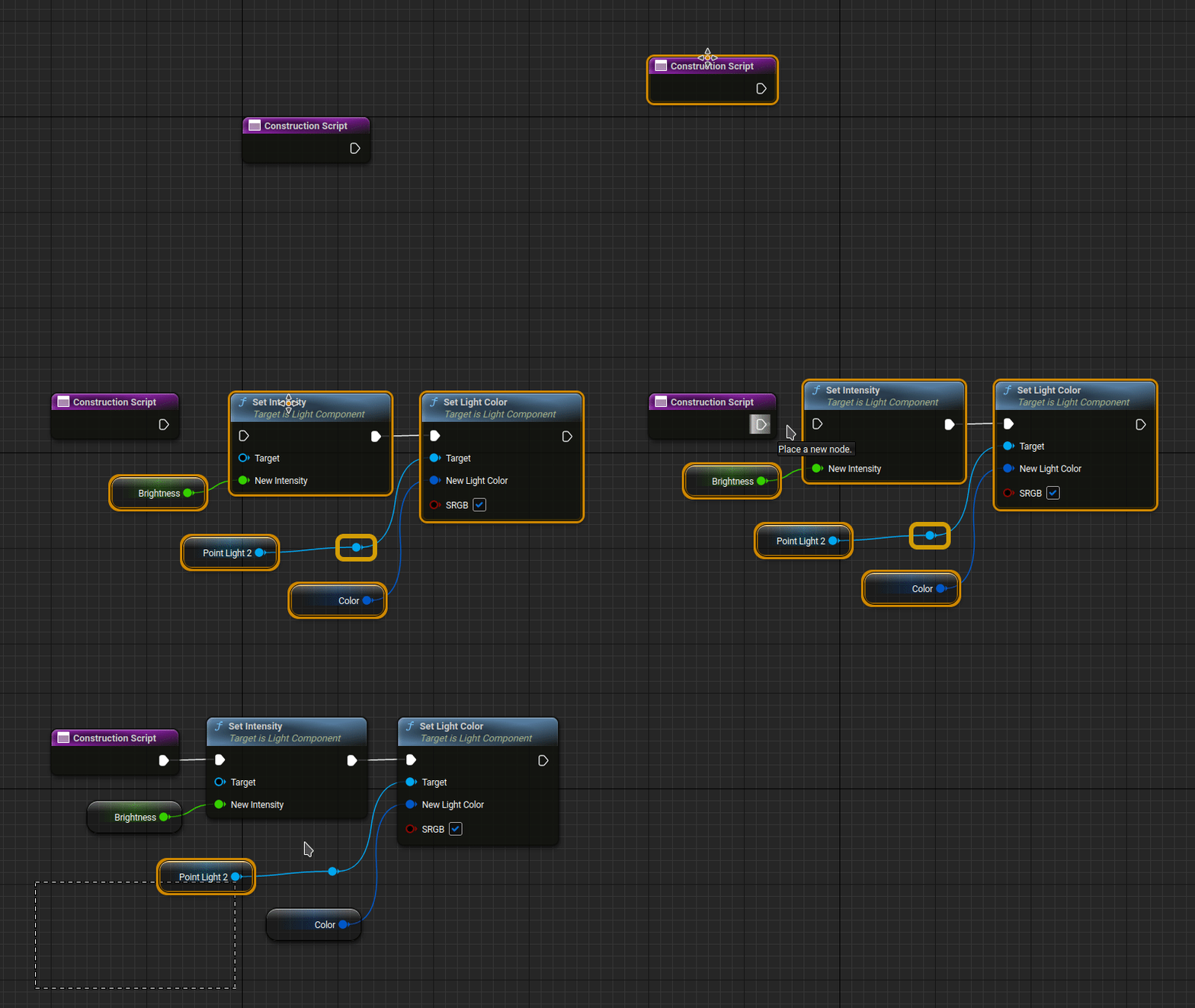](https://barsdeveloper.github.io/ueblueprint/)
## Getting started:
### Run locally
1) Open a terminal in the main folder.
2) Run the following commands.
```sh
npm install
npm run build
npx http-server
```
3) Open the link you see in the last message printed.
### Use in a web page
You can check `index.html` for a working example, the main steps are the following:
1. Make the `dist` directory available in your website by copying it or installing through npm `npm i ueblueprint`.
2. Include `dist/css/ueb-style.min.css` stylesheet in your page.
3. Define eventual CSS variables.
```HTML
```
4. Import the class Blueprint in JavaScript (this library uses modules).
```HTML
```
5. Define your blueprint by writing the code inside a `template`, inside a `ueb-blueprint` element.
Configuration:
- Height: ``
- Light mode: ``
- Initial zoom: ``
- Graph type: ``
```HTML
...
```