RECEIPTS
GPTZero: "Is this citation real?"
receipts: "Is this citation right?"


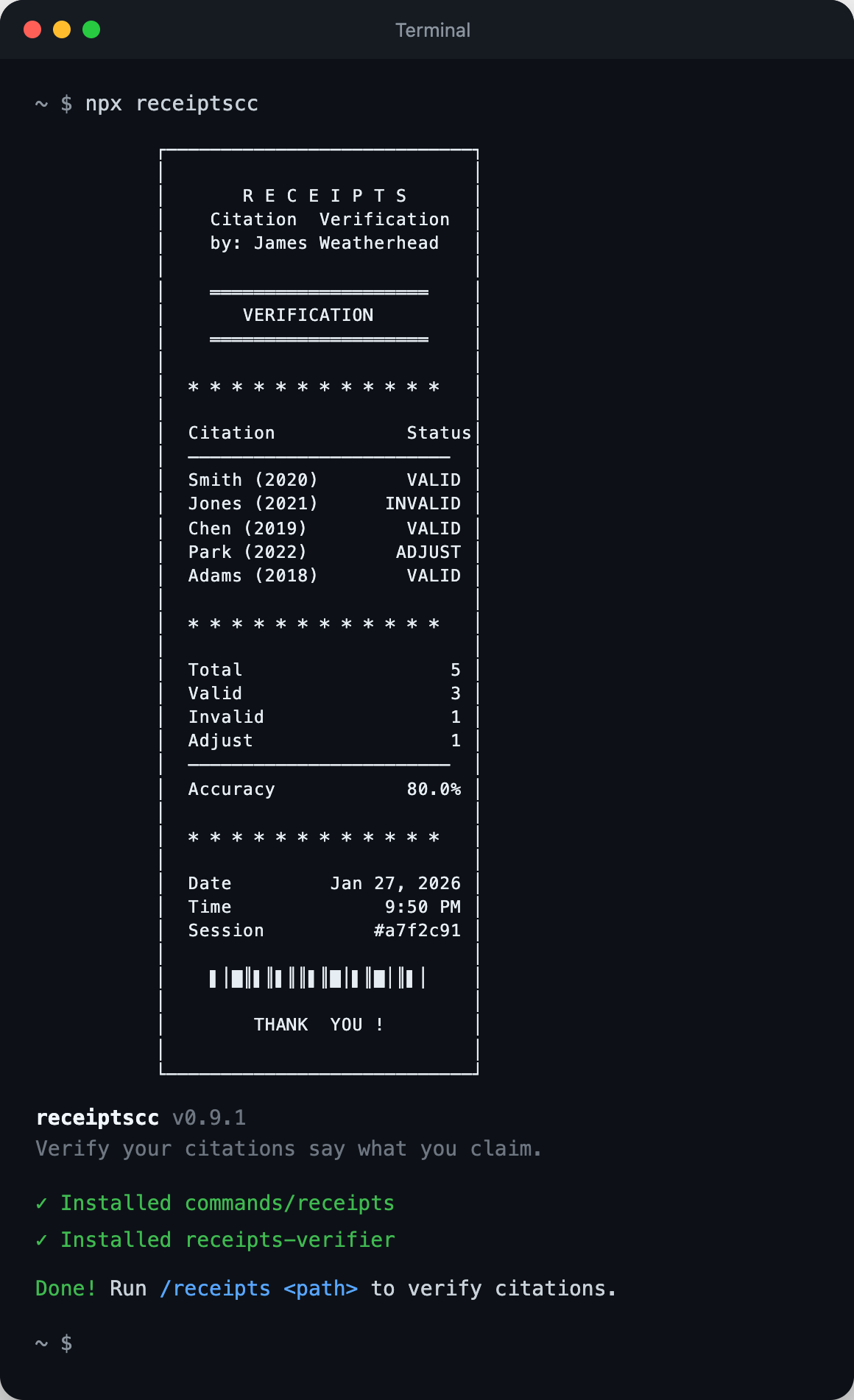
Works on Mac, Windows, and Linux
---
## The Problem
[GPTZero found 100 hallucinated citations across 51 papers at NeurIPS 2024.](https://techcrunch.com/2026/01/21/irony-alert-hallucinated-citations-found-in-papers-from-neurips-the-prestigious-ai-conference/) Those are the **fake** ones.
Nobody is counting the **real** papers that don't say what authors claim.
Your manuscript says: *"Smith et al. achieved 99% accuracy on all benchmarks"*
The actual paper says: *"We achieve 73% accuracy on the standard benchmark"*
Not fraud. Just human memory + exhaustion + LLM assistance = systematic misquotation.
**receipts catches this before your reviewers do.**
---
## What is this?
Give it your paper. Give it the PDFs you cited. It reads both. Tells you what's wrong.
Runs inside **[Claude Code](https://docs.anthropic.com/en/docs/claude-code)** (Anthropic's terminal assistant). One command. ~$0.50-$5 per paper.
Built by an MD/PhD student who got tired of manually re-checking citations at 2am before deadlines.
---
## Before You Start
You need two things:
### 1. Node.js
Check if you have it:
```bash
node --version
```
If you see a version number, you're good. If you see "command not found", download Node.js from **[nodejs.org](https://nodejs.org/)** and install it.
### 2. Anthropic API Key or Pro/Max Plan
You need one of these to use Claude Code:
- **API key:** Get one at **[console.anthropic.com](https://console.anthropic.com/)**. Requires a payment method.
- **Pro or Max plan:** If you subscribe to Claude Pro ($20/mo) or Max ($100/mo), you can use Claude Code without a separate API key.
---
## Setup (5 minutes)
### Step 1: Open your terminal
**Mac:** Press `Cmd + Space`, type `Terminal`, press Enter
**Windows:** Press `Win + X`, click "Terminal" or "PowerShell"
**Linux:** Press `Ctrl + Alt + T`
---
### Step 2: Install Claude Code
Copy this command and paste it into your terminal:
```bash
npm install -g @anthropic-ai/claude-code
```
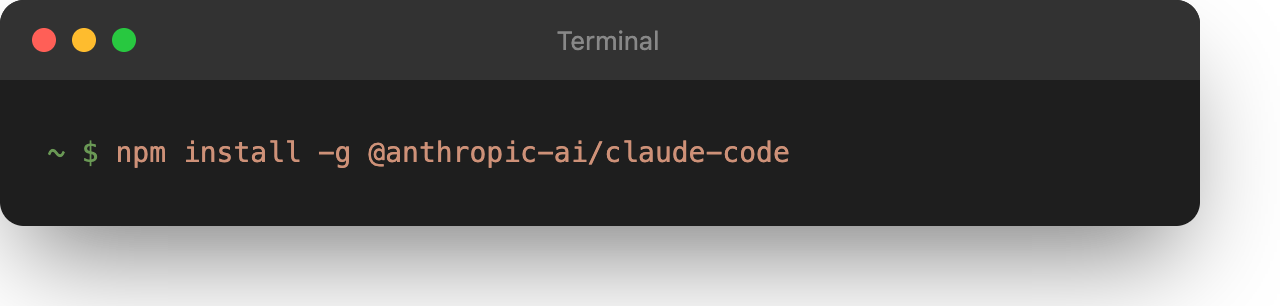
Wait for it to finish.
---
### Step 3: Install receiptscc
Copy and run this:
```bash
npx receiptscc
```
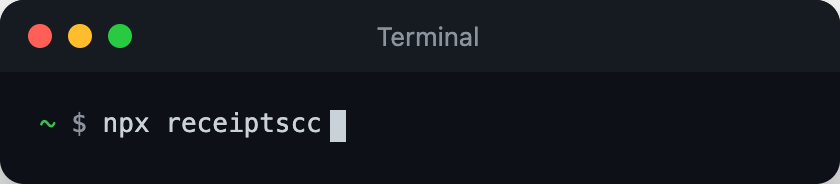
You will see a receipt banner. That means it worked. You only do this once.
---
### Step 4: Set up your paper folder
Create a folder with your paper and sources:
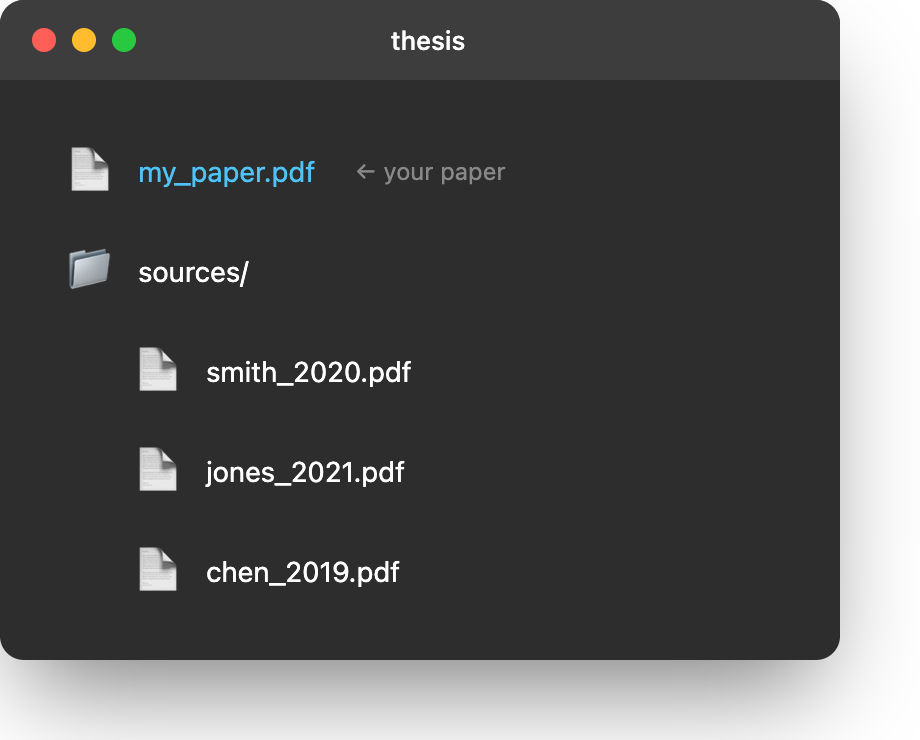
```
thesis/
├── my_paper.pdf ← your paper (any name)
└── sources/ ← create this folder
├── smith_2020.pdf ← PDFs you cited
├── jones_2021.pdf
└── chen_2019.pdf
```
**Put your paper in the folder. Create a subfolder called `sources`. Put the PDFs you cited inside `sources`.**
---
### Step 5: Open Claude Code
Navigate to your paper folder and start Claude Code:
```bash
cd ~/Desktop/thesis
claude
```
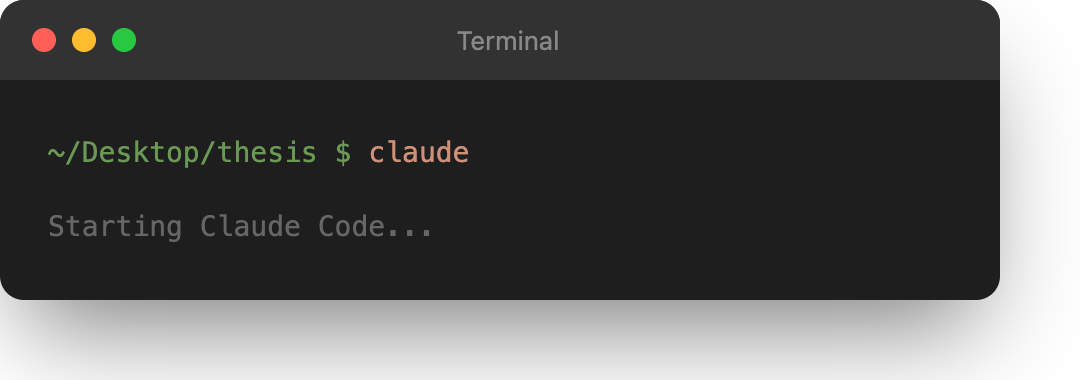
**Windows users:** Replace `~/Desktop/thesis` with your actual path, like `C:\Users\YourName\Desktop\thesis`
The first time you run `claude`, it will ask for your API key. Paste it in.
---
### Step 6: Run receipts
Now you are inside Claude Code. Type this command:
```
/receipts
```
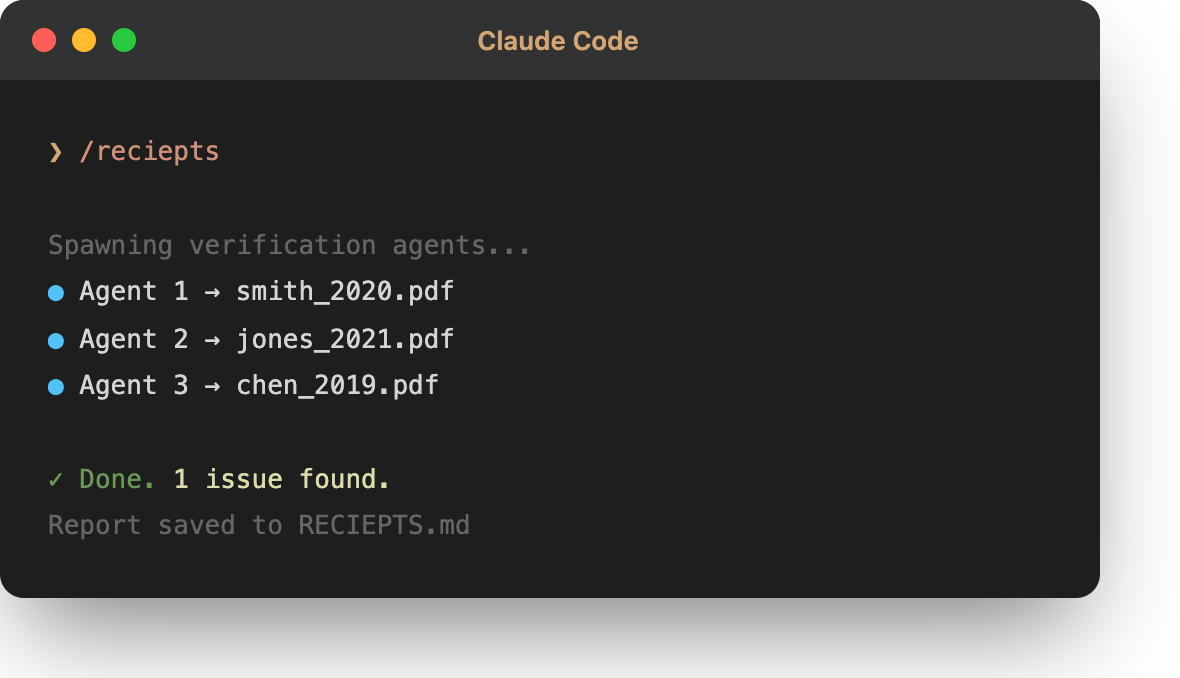
**Important:** The `/receipts` command only works inside Claude Code. If you type it in your regular terminal, it will not work.
receipts will read your paper, read your sources, and check every citation. When it finishes, it creates a file called `RECEIPTS.md` in your folder with the results.
---
## What You Get
A detailed verdict for each citation showing exactly what's wrong and how to fix it. [See example verdicts →](https://github.com/JamesWeatherhead/receipts/tree/main/demo/verdicts)
> ### Verdict: Reference 1 — ADJUST
>
> **Citation:** Srivastava et al. (2014). *Dropout: A Simple Way to Prevent Neural Networks from Overfitting.* JMLR.
>
> **Summary:** Reference 1 is cited four times in the manuscript. Two citations are accurate: the general description of dropout and the direct quote about co-adaptations. However, two citations contain errors that require correction.
>
> ---
>
> #### Instance 2 — Section "Dropout Regularization", paragraph 2
>
> **Manuscript claims:**
> > *"According to Srivastava et al., the optimal dropout probability is **p=0.5 for all layers**, which they found to work well across a wide range of networks and tasks."*
>
> **Source states:**
> > *"In the simplest case, each unit is retained with a fixed probability p independent of other units, where p can be chosen using a validation set or can simply be set at 0.5, which seems to be close to optimal for a wide range of networks and tasks."*
>
> **Source also states:**
> > ***"All dropout nets use p=0.5 for hidden units and p=0.8 for input units."***
>
> **Assessment:** NOT SUPPORTED
>
> **Discrepancy:** The manuscript claims "p=0.5 for all layers" but the source explicitly states p=0.5 for HIDDEN units and p=0.8 for INPUT units.
>
> ---
>
> #### Instance 3 — Section "Dropout Regularization", paragraph 2
>
> **Manuscript claims:**
> > *"Using this approach, they achieved an error rate of **0.89% on MNIST**, demonstrating state-of-the-art performance at the time."*
>
> **Source states:**
> > *"Error rates can be further improved to **0.94%** by replacing ReLU units with maxout units."*
>
> **Assessment:** NOT SUPPORTED
>
> **Discrepancy:** The manuscript claims 0.89% error rate, but the source states 0.94%. The figure 0.89% does not appear in the source.
>
> ---
>
> #### Required Corrections
> 1. Change `p=0.5 for all layers` → `p=0.5 for hidden units and p=0.8 for input units`
> 2. Change `0.89%` → `0.94%`
| Status | Meaning |
|--------|---------|
| **VALID** | Citation is accurate |
| **ADJUST** | Small fix needed |
| **INVALID** | Source doesn't support claim |
---
## Cost
| Paper Size | Citations | Haiku 3.5 | Sonnet 4 | Opus 4.5 |
|------------|-----------|-----------|----------|----------|
| Short | 10 | ~$0.50 | ~$2 | ~$9 |
| Medium | 25 | ~$1.30 | ~$5 | ~$24 |
| Full | 50 | ~$3 | ~$11 | ~$56 |
Use Haiku for drafts. Opus for final submission.
---
## Lightweight Install
receipts adds only **29 tokens** to your Claude Code context:
| Component | What it is | Tokens |
|-----------|------------|--------|
| `/receipts` | The command definition | 13 |
| `receipts-verifier` | Agent template for verification | 16 |
That's the install footprint—two tiny files. The actual verification work uses Claude's normal token budget (hence the ~$0.50-$5 cost per paper).
---
## Troubleshooting
**"npm: command not found"**
You need Node.js. Download it from [nodejs.org](https://nodejs.org/).
**"bash: /receipts: No such file or directory"**
You typed `/receipts` in your regular terminal. You need to type it inside Claude Code. First run `claude` to start Claude Code, then type `/receipts`.
**"No manuscript found"**
Make sure your PDF is in the root folder, not inside a subfolder.
**"No sources directory"**
Create a folder called exactly `sources` (lowercase) and put your cited PDFs inside.
**Claude Code asks for an API key**
Either get an API key at [console.anthropic.com](https://console.anthropic.com/), or subscribe to Claude Pro/Max at [claude.ai](https://claude.ai/).
---
## License
MIT
---
## Disclaimer
By using this tool, you confirm that you have the legal right to upload and process all documents you provide. This includes ensuring compliance with copyright laws, publisher terms, and institutional policies. Many academic papers are protected by copyright; you are responsible for verifying you have appropriate permissions (e.g., personal copies for research, open-access publications, or institutional access rights).
This tool is provided "as is" without warranty of any kind. The author assumes no liability for any claims arising from your use of this software or the documents you process with it. Use of this tool is also subject to [Anthropic's Terms of Service](https://www.anthropic.com/legal/consumer-terms).
---
Your citations are only as good as your memory. receipts is better than your memory.