 ╦╔═╗╔═╗╔╗╔  ╔═╗╔═╗
 ║╚═╗║ ║║║║══╠═╣╚═╗
╚╝╚═╝╚═╝╝╚╝  ╩ ╩╚═╝
Table of Contents
- [Installation](#installation)
- [Docs](#docs)
- [Usage](#usage)
- [Examples](#examples)
- [Omitting Fields](#omitting-fields)
- [Using Nullable Primitives](#using-nullable-primitives)
- [Working with Unknown or Dynamic Data](#working-with-unknown-or-dynamic-data)
- [Using Raw JSON Strings](#using-raw-json-strings)
- [Working with Enums](#working-with-enums)
- [Using Custom Serializers or Deserializers](#using-custom-serializers-or-deserializers)
- [Overriding built-in Container Types](#overriding-built-in-container-types)
- [Performance](#performance)
- [Real-World Throughput](#real-world-throughput)
- [Comparison to JavaScript](#comparison-to-javascript)
- [Library Comparison](#library-comparison)
- [Lazy Fields](#lazy-fields)
- [Performance Tuning](#performance-tuning)
- [Running Benchmarks Locally](#running-benchmarks-locally)
- [Debugging](#debugging)
- [Architecture](#architecture)
- [Contributing](#contributing)
- [Who uses it?](#who-uses-it)
- [License](#license)
- [Contact](#contact)
## Installation
```bash
npm install json-as
```
Add the `--transform` to your `asc` command (e.g. in package.json)
```bash
--transform json-as
```
Optionally, for additional performance, also add:
```bash
--enable simd
```
Alternatively, add it to your `asconfig.json`
```typescript
{
"options": {
"transform": ["json-as"]
}
}
```
If you'd like to see the code that the transform generates, run the build step with `DEBUG=true`
## Docs
Full documentation lives at:
## Usage
```typescript
import { JSON } from "json-as";
@json
class Vec3 {
x: f32 = 0.0;
y: f32 = 0.0;
z: f32 = 0.0;
}
@json
class Player {
@alias("first name")
firstName!: string;
lastName!: string;
lastActive!: i32[];
// Drop in a code block, function, or expression that evaluates to a boolean
@omitif((self: Player) => self.age < 18)
age!: i32;
@omitnull()
pos!: Vec3 | null;
isVerified!: boolean;
}
const player: Player = {
firstName: "Jairus",
lastName: "Tanaka",
lastActive: [3, 9, 2025],
age: 18,
pos: {
x: 3.4,
y: 1.2,
z: 8.3,
},
isVerified: true,
};
const serialized = JSON.stringify(player);
const deserialized = JSON.parse(serialized);
console.log("Serialized " + serialized);
console.log("Deserialized " + JSON.stringify(deserialized));
```
## Examples
### Omitting Fields
This library allows selective omission of fields during serialization using the following decorators:
**@omit**
This decorator excludes a field from serialization entirely.
```typescript
@json
class Example {
name!: string;
@omit
SSN!: string;
}
const obj = new Example();
obj.name = "Jairus";
obj.SSN = "123-45-6789";
console.log(JSON.stringify(obj)); // { "name": "Jairus" }
```
**@omitnull**
This decorator omits a field only if its value is null.
```typescript
@json
class Example {
name!: string;
@omitnull()
optionalField!: string | null;
}
const obj = new Example();
obj.name = "Jairus";
obj.optionalField = null;
console.log(JSON.stringify(obj)); // { "name": "Jairus" }
```
**@omitif((self: this) => condition)**
This decorator omits a field based on a custom predicate function.
```typescript
@json
class Example {
name!: string;
@omitif((self: Example) => self.age <= 18)
age!: number;
}
const obj = new Example();
obj.name = "Jairus";
obj.age = 18;
console.log(JSON.stringify(obj)); // { "name": "Jairus" }
obj.age = 99;
console.log(JSON.stringify(obj)); // { "name": "Jairus", "age": 99 }
```
If age were higher than 18, it would be included in the serialization.
**@optional**
This decorator marks a field as optional for deserialization: the key may be absent from (or appear in any order in) the input, and the field keeps its default. Unlike `@omitnull` and `@omitif`, it does not affect serialization - the field is always emitted - and it has no nullability requirement. It only opts the field into the order-tolerant fast path on parse.
```typescript
@json
class Tweet {
text!: string;
@optional
retweeted_status: Retweet | null = null; // key may be absent
}
const tweet = JSON.parse('{ "text": "hello" }');
console.log(tweet.retweeted_status); // null (key was absent)
```
### Using nullable primitives
AssemblyScript doesn't support using nullable primitive types, so instead, json-as offers the `JSON.Box` class to remedy it.
For example, this schema won't compile in AssemblyScript:
```typescript
@json
class Person {
name!: string;
age: i32 | null = null;
}
```
Instead, use `JSON.Box` to allow nullable primitives:
```typescript
@json
class Person {
name: string;
age: JSON.Box | null = null;
constructor(name: string) {
this.name = name;
}
}
const person = new Person("Jairus");
console.log(JSON.stringify(person)); // {"name":"Jairus","age":null}
person.age = new JSON.Box(18); // Set age to 18
console.log(JSON.stringify(person)); // {"name":"Jairus","age":18}
```
### Working with unknown or dynamic data
Sometimes it's necessary to work with unknown data or data with dynamic types.
Because AssemblyScript is a statically-typed language, that typically isn't allowed, so json-as provides the `JSON.Value` and `JSON.Obj` types.
Here's a few examples:
**Working with multi-type arrays**
When dealing with arrays that have multiple types within them, eg. `["string",true,["array"]]`, use `JSON.Value[]`
```typescript
const a = JSON.parse('["string",true,["array"]]');
console.log(JSON.stringify(a[0])); // "string"
console.log(JSON.stringify(a[1])); // true
console.log(JSON.stringify(a[2])); // ["array"]
```
**Working with unknown objects**
When dealing with an object with an unknown structure, use the `JSON.Obj` type
```typescript
const obj = JSON.parse('{"a":3.14,"b":true,"c":[1,2,3],"d":{"x":1,"y":2,"z":3}}');
console.log("Keys: " + obj.keys().join(" ")); // a b c d
console.log(
"Values: " +
obj
.values()
.map((v) => JSON.stringify(v))
.join(" "),
); // 3.14 true [1,2,3] {"x":1,"y":2,"z":3}
const y = obj.get("d")!.get().get("y")!;
console.log('o1["d"]["y"] = ' + y.toString()); // o1["d"]["y"] = 2
```
**Working with dynamic types within a schema**
More often, objects will be completely statically typed except for one or two values.
In such cases, `JSON.Value` can be used to handle fields that may hold different types at runtime.
```typescript
@json
class DynamicObj {
id: i32 = 0;
name: string = "";
data!: JSON.Value; // Can hold any type of value
}
const obj = new DynamicObj();
obj.id = 1;
obj.name = "Example";
obj.data = JSON.parse('{"key":"value"}'); // Assigning an object
console.log(JSON.stringify(obj)); // {"id":1,"name":"Example","data":{"key":"value"}}
obj.data = JSON.Value.from(42); // Changing to an integer
console.log(JSON.stringify(obj)); // {"id":1,"name":"Example","data":42}
obj.data = JSON.Value.from("a string"); // Changing to a string
console.log(JSON.stringify(obj)); // {"id":1,"name":"Example","data":"a string"}
```
**Working with nullable primitives and dynamic data**
```ts
const box = JSON.Box.from(123);
const value = JSON.Value.from | null>(box);
const reboxed = JSON.Box.fromValue(value); // Box | null
console.log(reboxed !== null ? reboxed!.toString() : "null");
// 123
const value = JSON.parse("123");
const boxed = JSON.Box.fromValue(value);
console.log(boxed !== null ? boxed!.toString() : "null");
// 123
```
### Using Raw JSON strings
Sometimes its necessary to simply copy a string instead of serializing it.
For example, the following data would typically be serialized as:
```typescript
const map = new Map();
map.set("pos", '{"x":1.0,"y":2.0,"z":3.0}');
console.log(JSON.stringify(map));
// {"pos":"{\"x\":1.0,\"y\":2.0,\"z\":3.0}"}
// pos's value (Vec3) is contained within a string... ideally, it should be left alone
```
If, instead, one wanted to insert Raw JSON into an existing schema/data structure, they could make use of the JSON.Raw type to do so:
```typescript
const map = new Map();
map.set("pos", new JSON.Raw('{"x":1.0,"y":2.0,"z":3.0}'));
console.log(JSON.stringify(map));
// {"pos":{"x":1.0,"y":2.0,"z":3.0}}
// Now its properly formatted JSON where pos's value is of type Vec3 not string!
```
### Working with enums
By default, enums with values other than `i32` arn't supported by AssemblyScript. However, you can use a workaround:
```typescript
namespace Foo {
export const bar = "a";
export const baz = "b";
export const gob = "c";
}
type Foo = string;
const serialized = JSON.stringify(Foo.bar);
// "a"
```
### Using custom serializers or deserializers
This library supports custom serialization and deserialization methods, which can be defined using the `@serializer` and `@deserializer` decorators.
Custom serializers and deserializers must always speak valid JSON. You can optionally provide the JSON value shape they operate on using one of: `"any"`, `"string"`, `"number"`, `"object"`, `"array"`, `"boolean"`, or `"null"`. If omitted, the shape defaults to `"any"`.
Here's an example of creating a custom data type called `Point` which serializes to a JSON string:
```typescript
@json
class Point {
x: f64 = 0.0;
y: f64 = 0.0;
constructor(x: f64, y: f64) {
this.x = x;
this.y = y;
}
@serializer("string")
serializer(self: Point): string {
return JSON.stringify(`${self.x},${self.y}`);
}
@deserializer("string")
deserializer(data: string): Point {
const raw = JSON.parse(data);
if (!raw.length) throw new Error("Could not deserialize provided data as type Point");
const c = raw.indexOf(",");
const x = raw.slice(0, c);
const y = raw.slice(c + 1);
return new Point(f64.parse(x), f64.parse(y)); // NEVER use this in deserializers. Always return a new instance
}
}
const obj = new Point(3.5, -9.2);
const serialized = JSON.stringify(obj);
const deserialized = JSON.parse(serialized);
console.log("Serialized " + serialized);
console.log("Deserialized " + JSON.stringify(deserialized));
```
The serializer function converts a `Point` instance into a valid JSON string value.
The deserializer function parses that JSON string back into a `Point` instance.
Custom deserializers should always instantiate and return a new object. They should not assume an existing destination instance will be passed in or reused.
These functions are then wrapped before being consumed by the json-as library:
```typescript
__SERIALIZE_CUSTOM(): void {
const data = this.serializer(this);
const dataSize = data.length << 1;
memory.copy(bs.offset, changetype(data), dataSize);
bs.offset += dataSize;
}
_DESERIALIZE_CUSTOM(data: string): Point {
return this.deserializer(data);
}
```
This allows custom serialization while maintaining a generic interface for the library to access.
### Overriding built-in container types
Undecorated subclasses of built-in container types keep the built-in JSON behavior.
This rule applies consistently across:
- `JSON.stringify(...)`
- `JSON.parse(...)`
- `JSON.Value.from(...)`
- `JSON.internal.stringify(...)`
- `JSON.internal.parse(...)`
For example:
- `class MyBytes extends Uint8Array {}` still serializes like a normal `Uint8Array`
- `class MyMap extends Map {}` still serializes like a normal `Map`
- the same applies to subclassable built-ins such as `Array`, `Set`, and typed arrays
If you decorate that subclass with `@json`, it is treated as a normal generated class instead of inheriting the built-in container behavior. That means generated `__SERIALIZE` / `__DESERIALIZE` logic and custom serializer/deserializer hooks can take over.
If you want a different wire format, decorate the subclass with `@json` and provide custom `@serializer(...)` / `@deserializer(...)` methods:
```typescript
function hexDigit(value: u8): string {
return String.fromCharCode(value < 10 ? 48 + value : 87 + value);
}
function parseHexNibble(code: u16): u8 {
if (code >= 48 && code <= 57) return (code - 48);
if (code >= 97 && code <= 102) return (code - 87);
return (code - 55);
}
@json
class HexBytes extends Uint8Array {
constructor(length: i32 = 0) {
super(length);
}
@serializer("string")
serializer(self: HexBytes): string {
let out = "";
for (let i = 0; i < self.length; i++) {
const value = unchecked(self[i]);
out += hexDigit(value >> 4);
out += hexDigit(value & 0x0f);
}
return JSON.stringify(out);
}
@deserializer("string")
deserializer(data: string): HexBytes {
const raw = JSON.parse(data);
const out = new HexBytes(raw.length >> 1);
for (let i = 0, j = 0; i < raw.length; i += 2, j++) {
const hi = parseHexNibble(raw.charCodeAt(i));
const lo = parseHexNibble(raw.charCodeAt(i + 1));
unchecked((out[j] = ((hi << 4) | lo)));
}
return out;
}
}
const bytes = new HexBytes(4);
bytes[0] = 10;
bytes[1] = 20;
bytes[2] = 30;
bytes[3] = 40;
JSON.stringify(bytes); // "\"0a141e28\""
JSON.parse("\"0a141e28\"");
```
This same pattern works for subclassable built-ins like `Array`, `Map`, `Set`, and typed arrays.
`ArrayBuffer` and `String` are `@final` in AssemblyScript, so they cannot be subclassed there.
## Performance
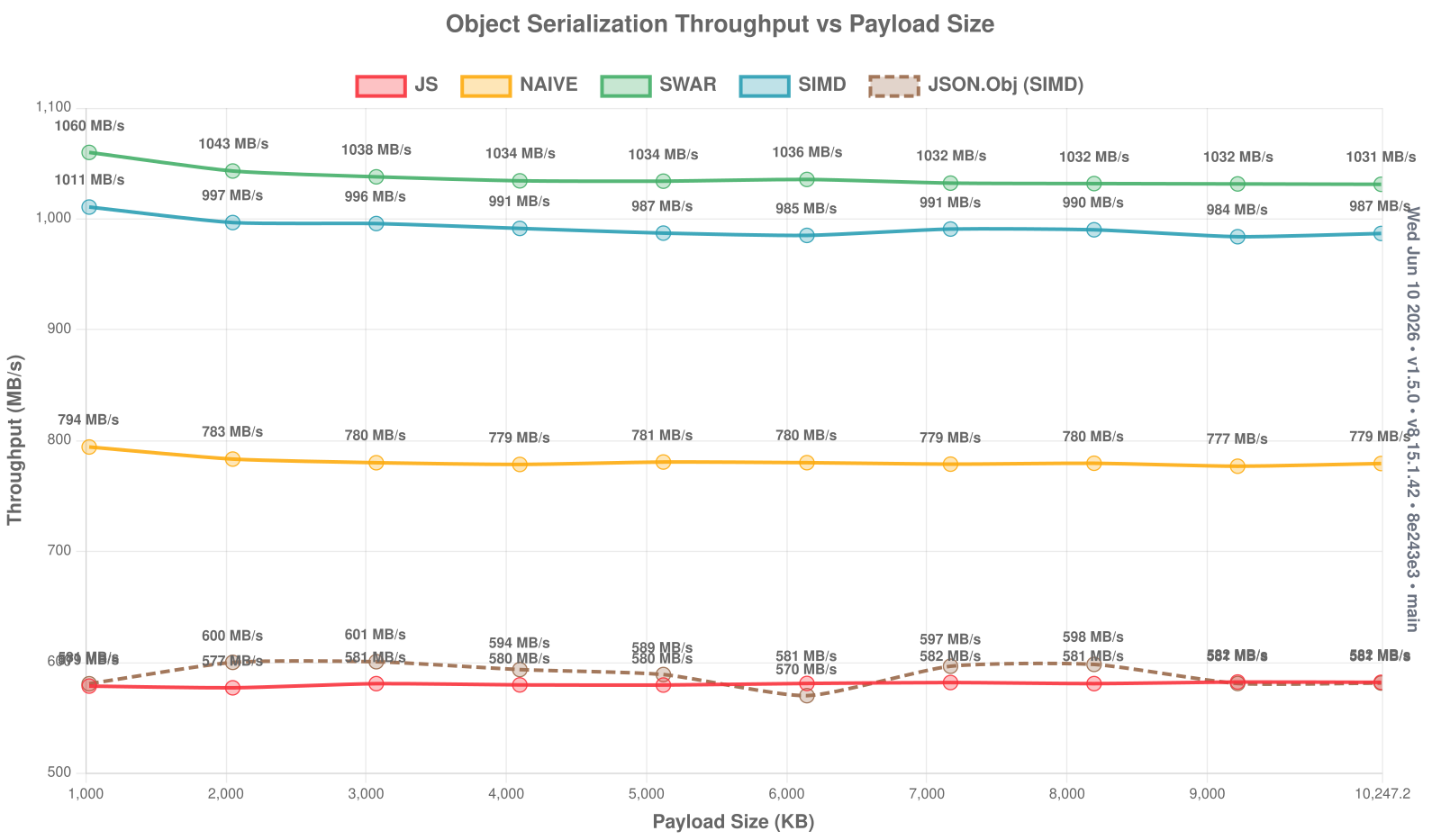
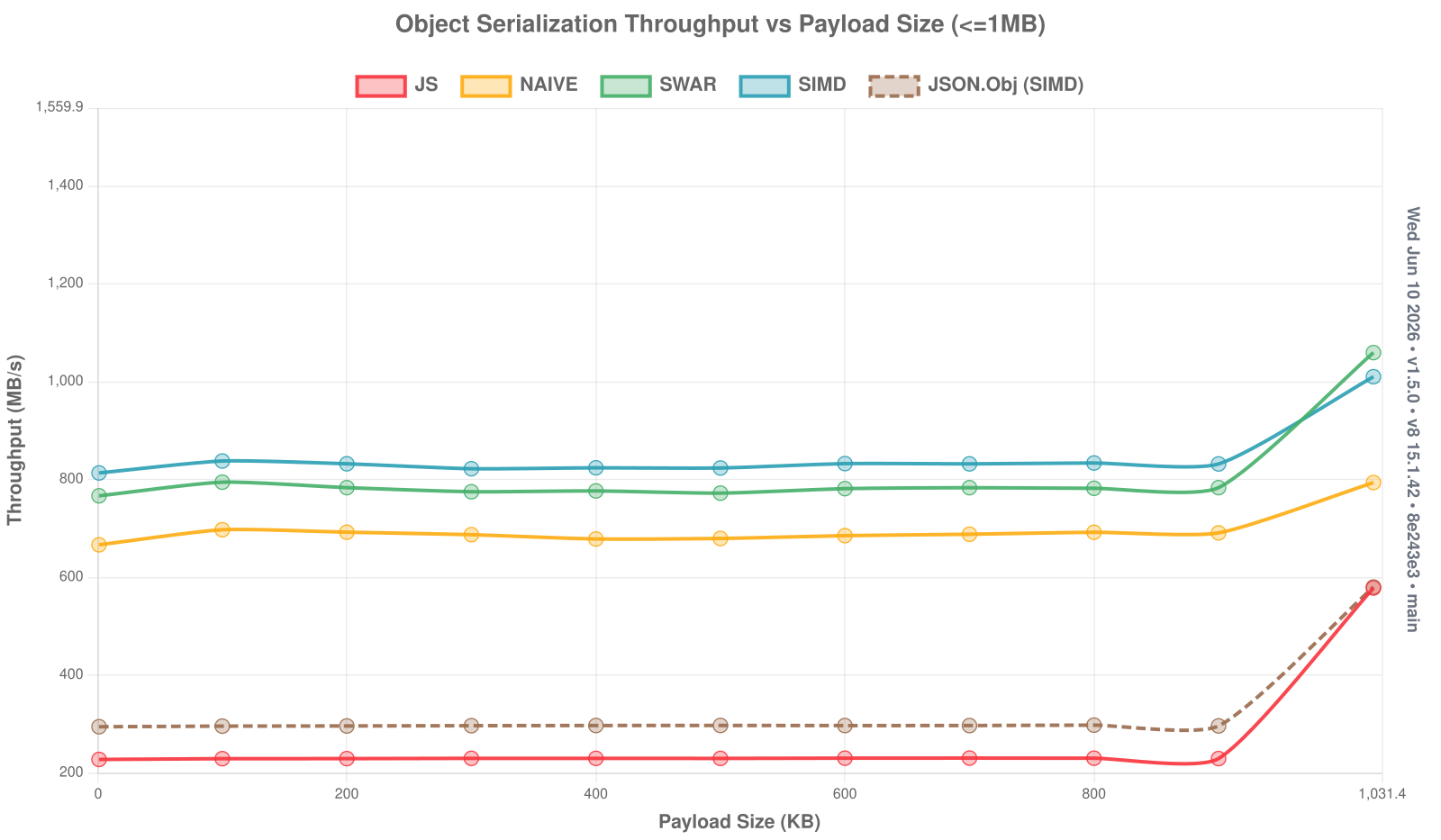
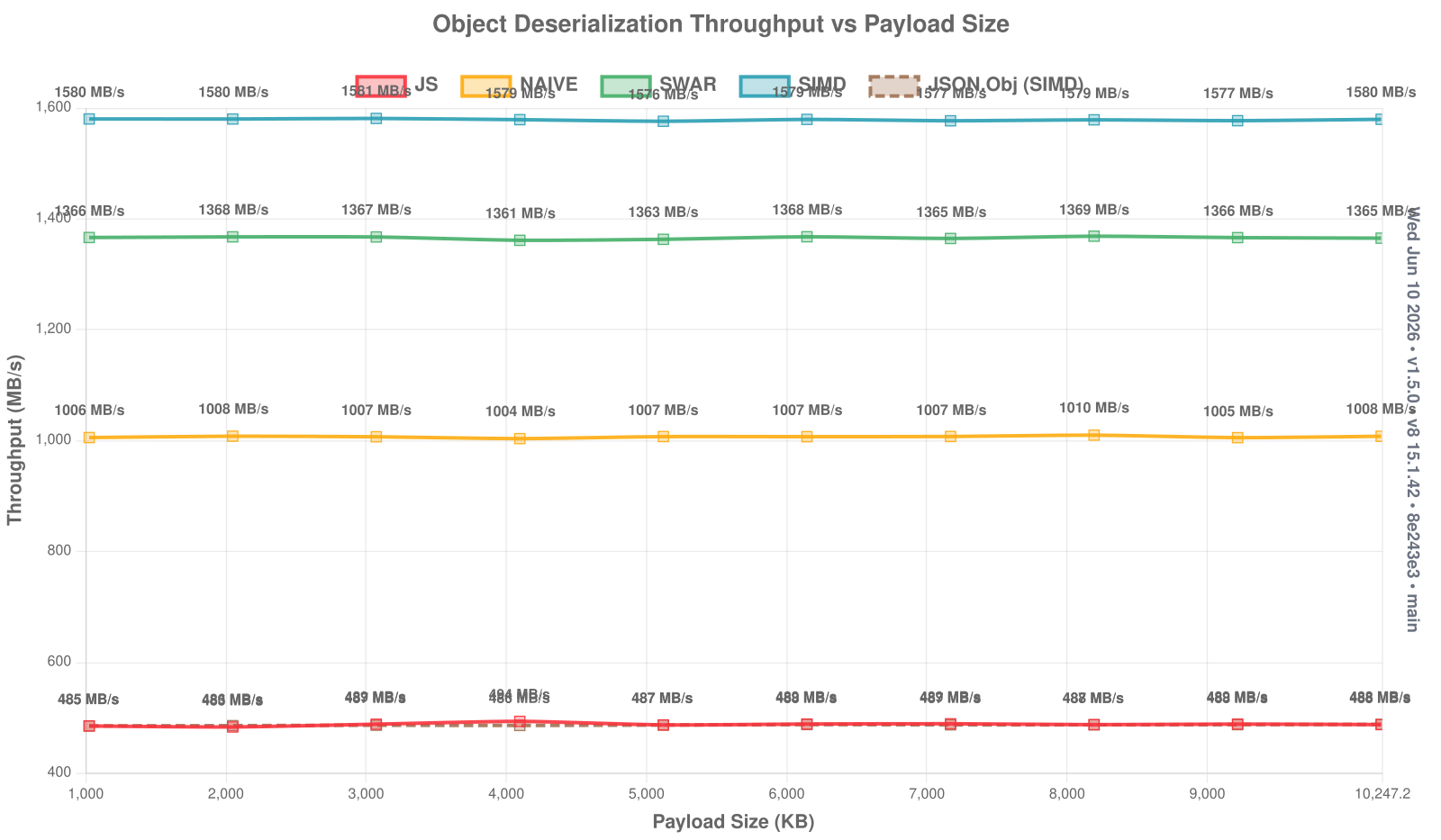
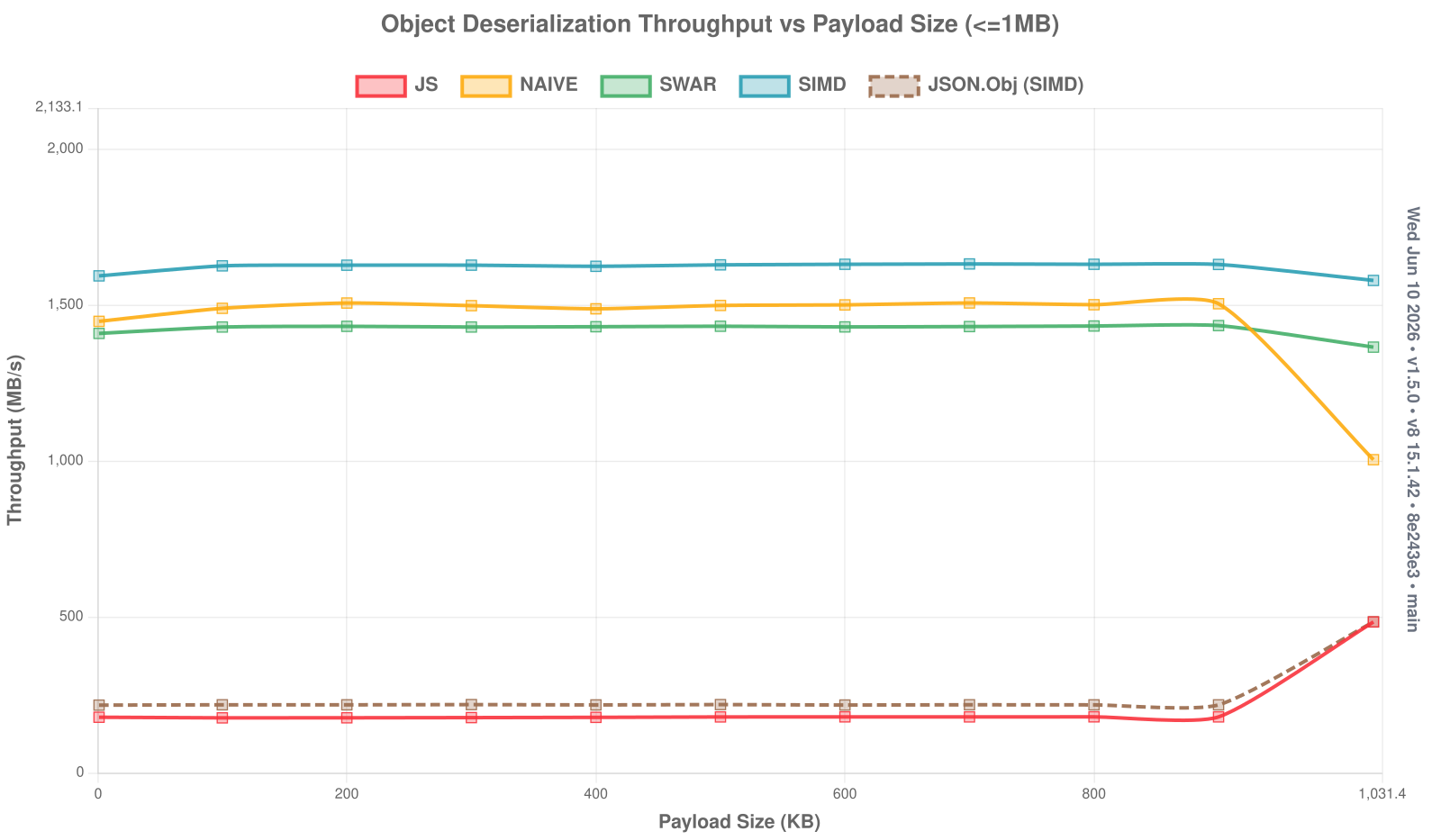
`json-as` is engineered for **multi-GB/s** serialization and deserialization. Every `@json` schema is compiled to specialized WebAssembly at build time, and bytes are scanned by one of three interchangeable backends:
- **NAIVE** — a portable, branchy scalar scanner. The correctness baseline; needs no special CPU features.
- **SWAR** — *SIMD-Within-A-Register*: processes 8 bytes at a time with ordinary 64-bit integer math. The default.
- **SIMD** — true 128-bit vector scanning. Fastest on large and string-heavy payloads; enable with `--enable simd`.
The mode is chosen per build via `JSON_MODE` (see [Performance Tuning](#performance-tuning)). Orthogonal to the scan mode, the generated **struct** path can be swapped for **[lazy](#lazy-fields)** fields (defer parsing until first access) or the fully dynamic, schema-less **`JSON.Obj`** path.
> All figures below are **end-to-end**: deserialization includes allocating the destination object/array, not just scanning bytes — raw parser throughput is higher. Charts are generated locally and pushed to the [`docs`](https://github.com/JairusSW/json-as/tree/docs) branch, and reflect the **latest release** (older versions may differ).
>
> Benchmark machine: AMD Ryzen 7 7800X3D (8 cores, 96 MB 3D V-Cache), 32 GB RAM, Zorin OS 18.1 (Linux 6.17). JavaScript baselines run on V8's turboshaft optimizer.
📊 **[Browse the full chart set for this release →](https://github.com/JairusSW/json-as/tree/docs/charts/v1.5.0)**
### Real-World Throughput
The headline benchmark: nine standard JSON payloads — drawn from the [yyjson](https://github.com/ibireme/yyjson) and [`nativejson-benchmark`](https://github.com/miloyip/nativejson-benchmark) corpora — measured in all three scan modes, with the SIMD lazy-struct and dynamic `JSON.Obj` paths shown alongside.
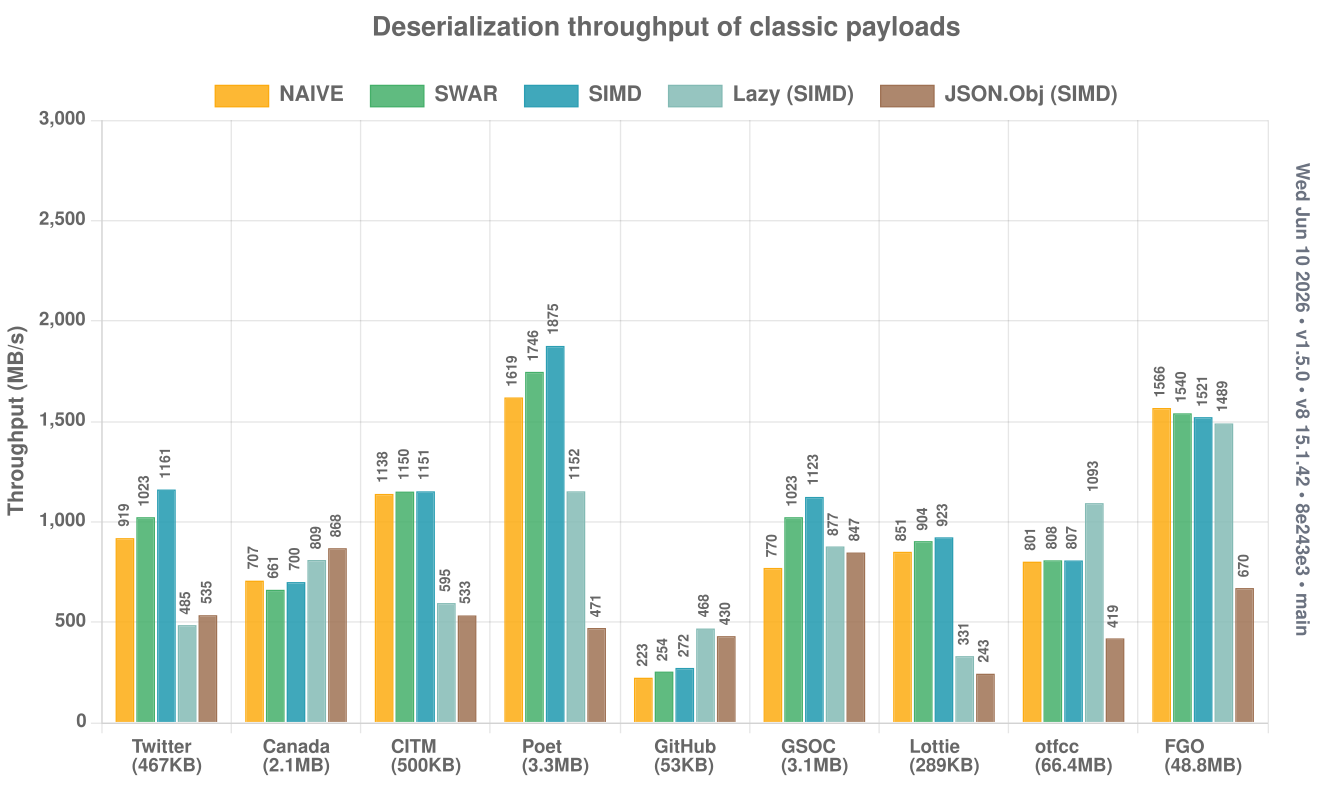
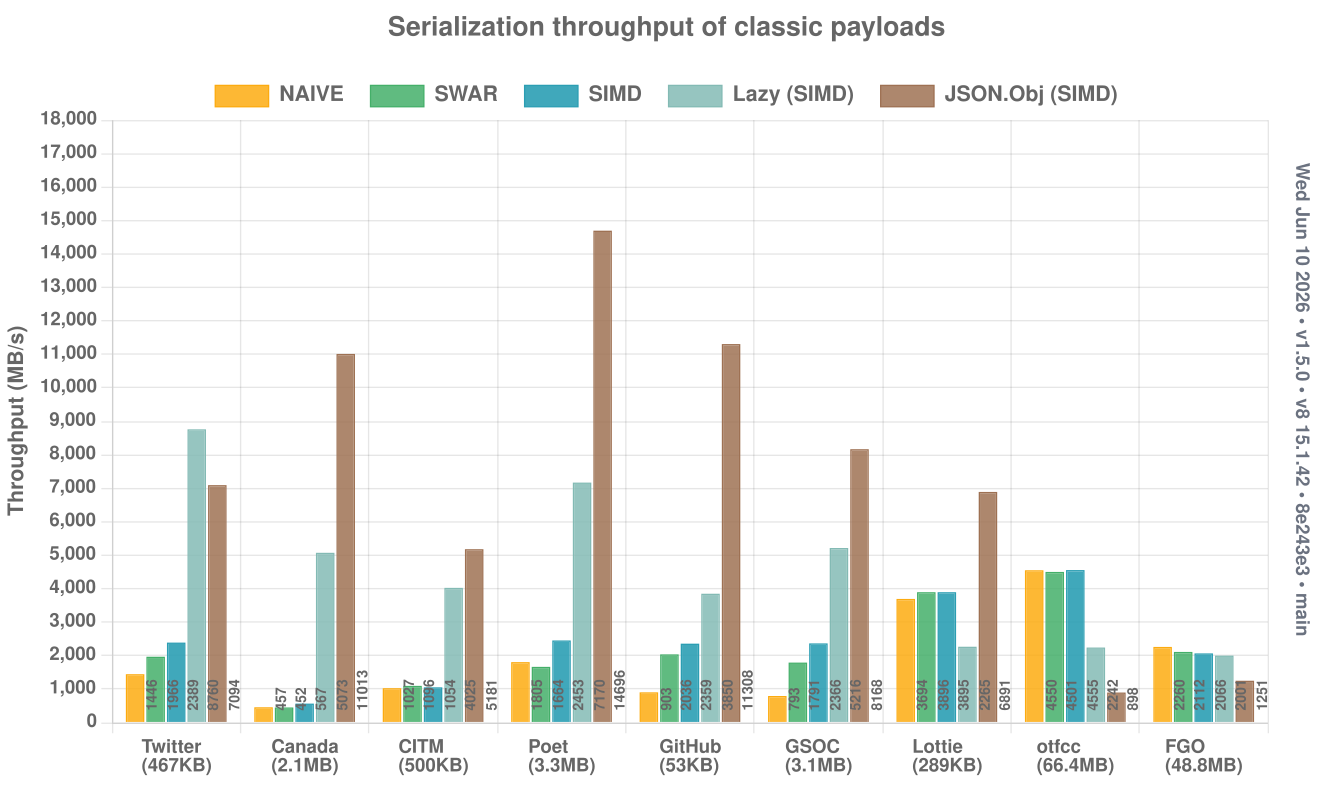 Each payload stresses a different document shape:
| Payload | Size | What it stresses |
|---------|------|------------------|
| **Twitter** | 467 KB | API response, fully-modeled struct schema with `@optional` keys |
| **Canada** | 2.1 MB | GeoJSON — deeply nested arrays of floating-point coordinates |
| **CITM** | 500 KB | Concert catalog — dynamic-key `Map`s plus uniform struct arrays |
| **Poet** | 3.3 MB | ~8,900 flat `{desc, name, id}` records — pure struct fast path |
| **GitHub** | 53 KB | 30 GitHub events — a wide union of per-event-type fields |
| **GSOC** | 3.1 MB | ~1,264 org records keyed by id (schema.org JSON-LD `Map`) |
| **Lottie** | 289 KB | Vector-animation doc — structs over deeply variable layer data |
| **otfcc** | 66.4 MB | OpenType font dump — 15 tables captured as `JSON.Raw` |
| **FGO** | 48.8 MB | Game-data dump — 193 irregular tables as `Map` |
The five series in each chart:
- **NAIVE / SWAR / SIMD** — the generated struct path under each scan backend, parsing every field into a typed schema.
- **Lazy (SIMD)** — `@json({ lazy: "auto" })`: each field's raw slice is stored at parse time and decoded only on first access; on serialize, untouched fields stream their original bytes straight back out. Reading or rewriting a subset is dramatically cheaper — see [Lazy Fields](#lazy-fields).
- **JSON.Obj (SIMD)** — a fully dynamic, schema-less parse into `JSON.Obj`, with no generated per-type code.
### Comparison to JavaScript
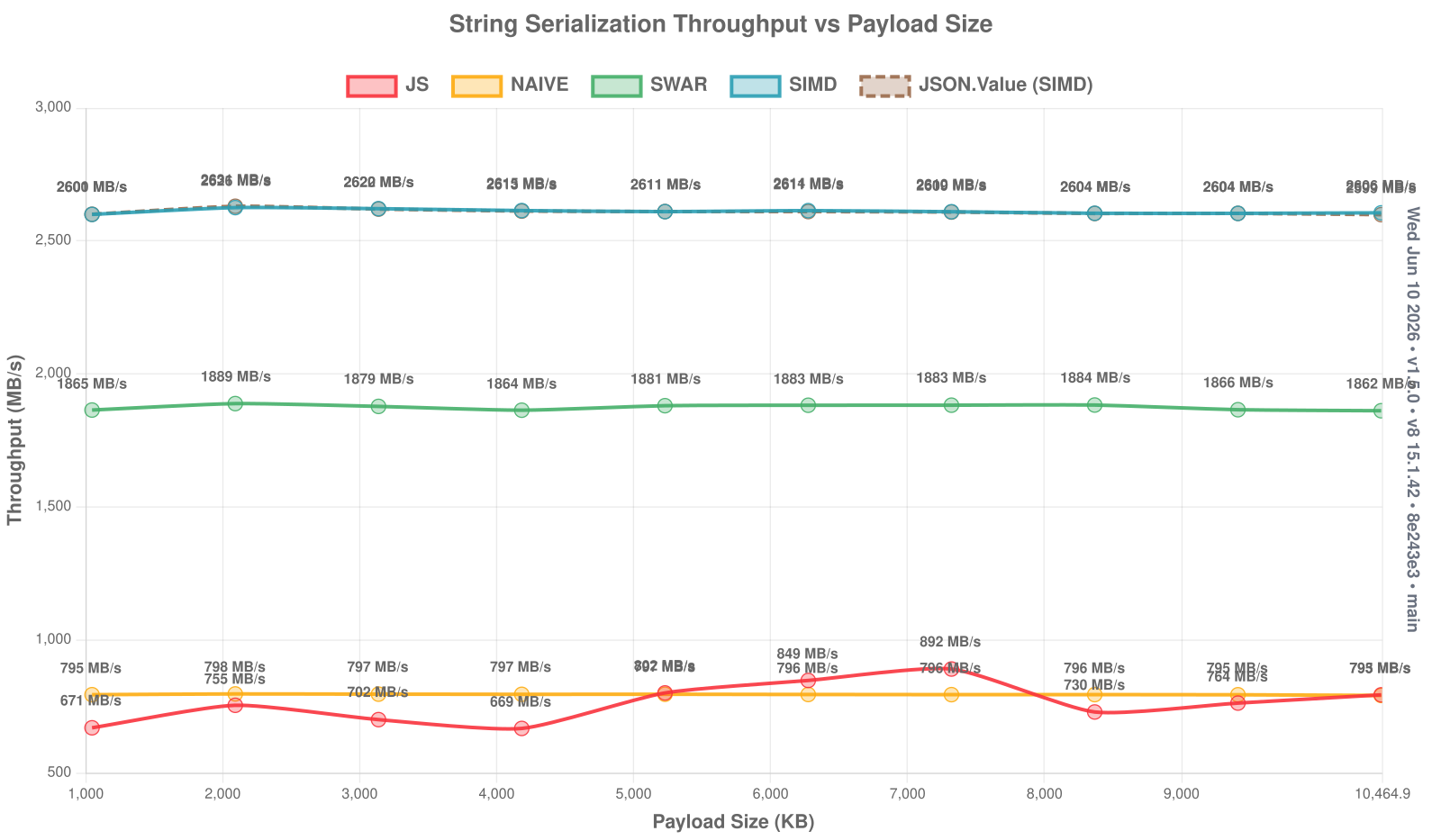
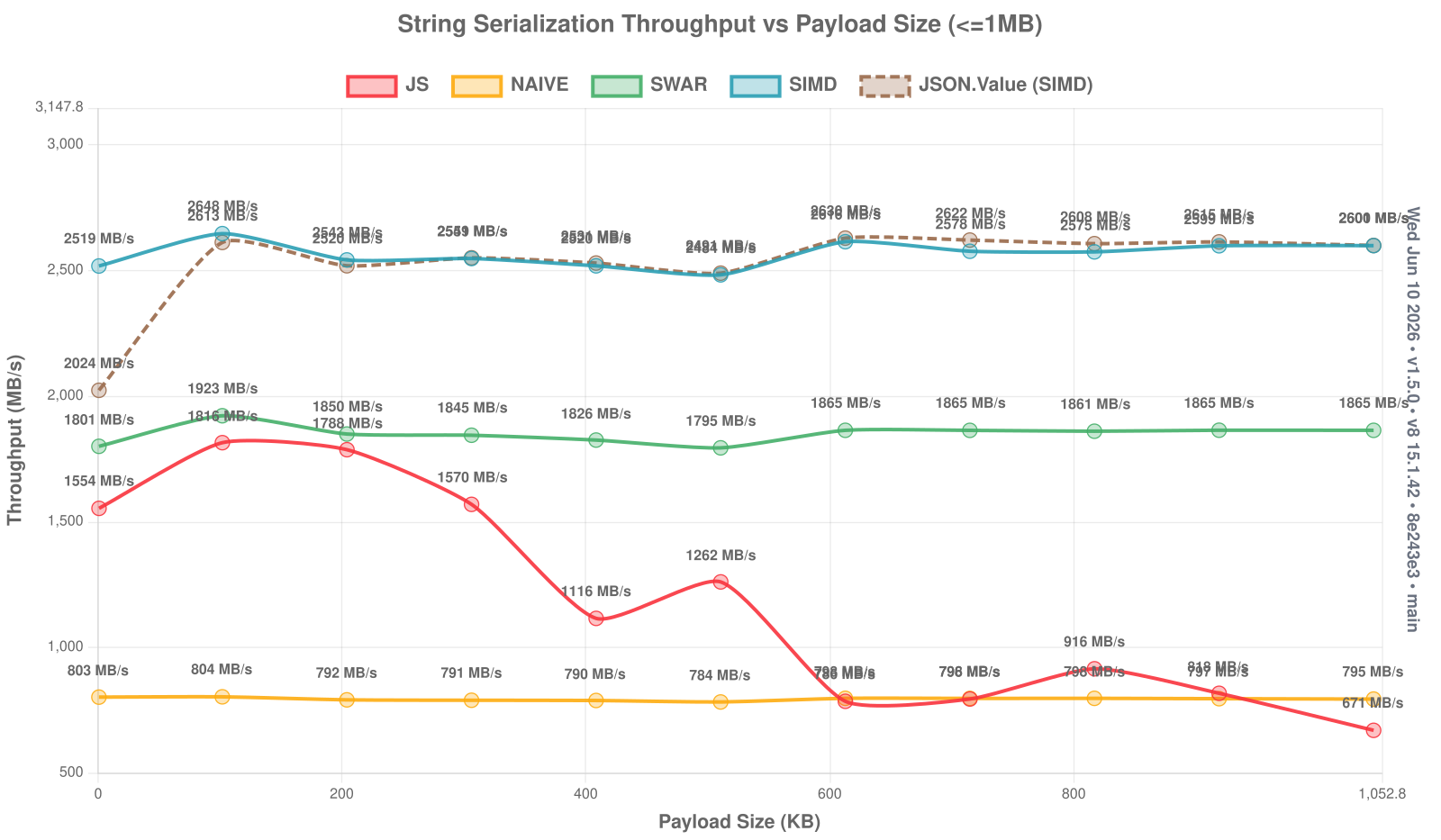
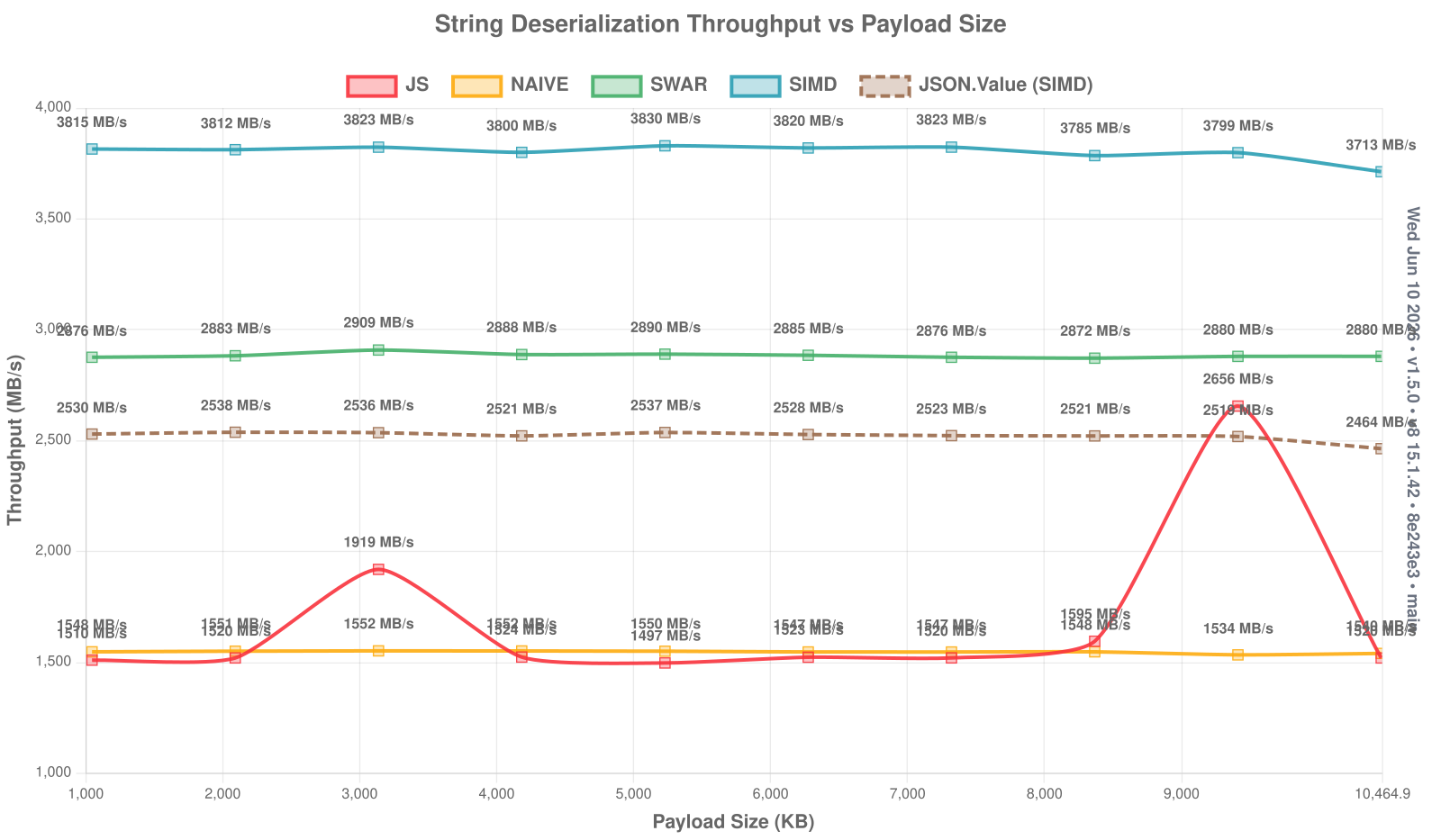
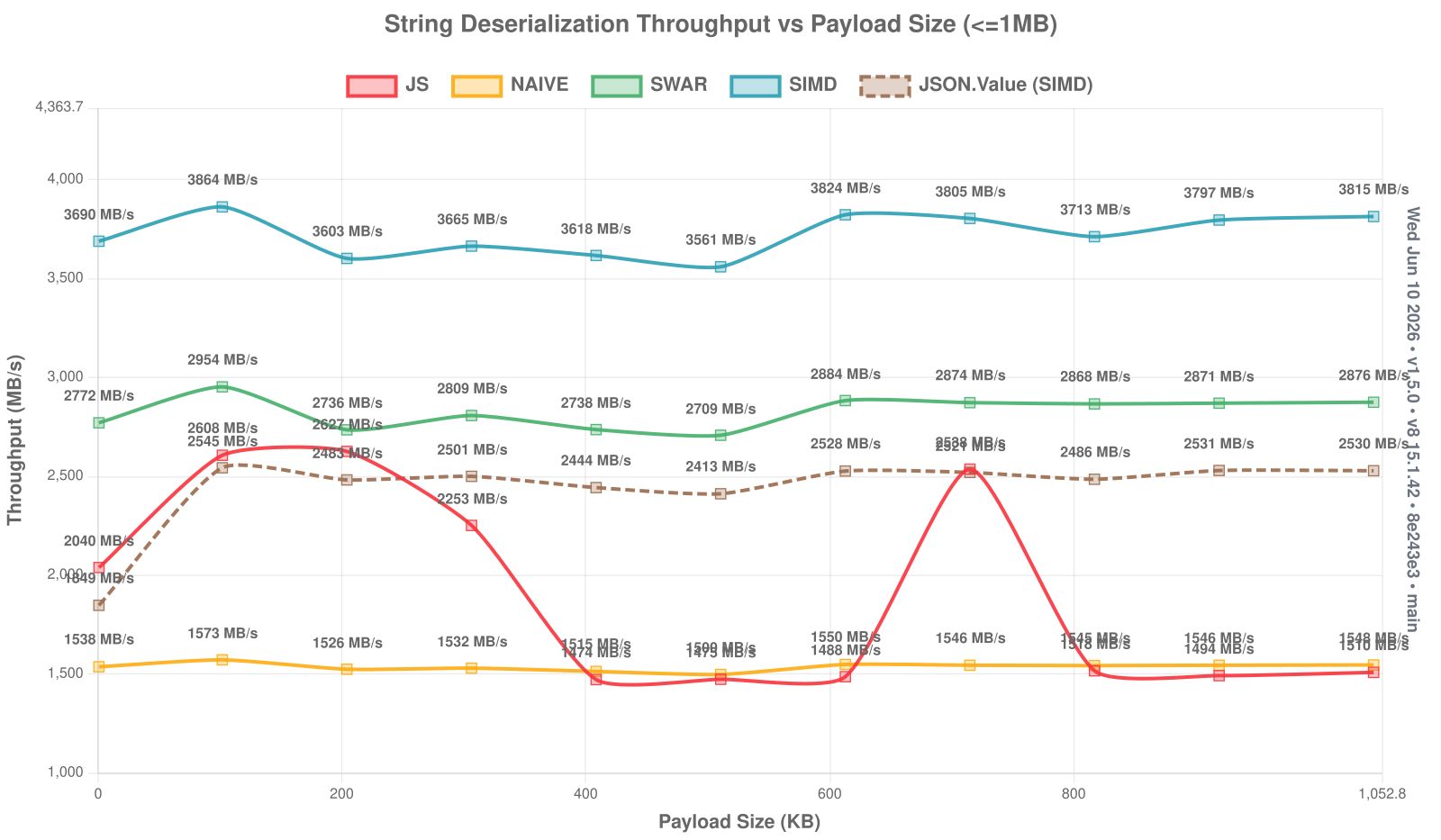
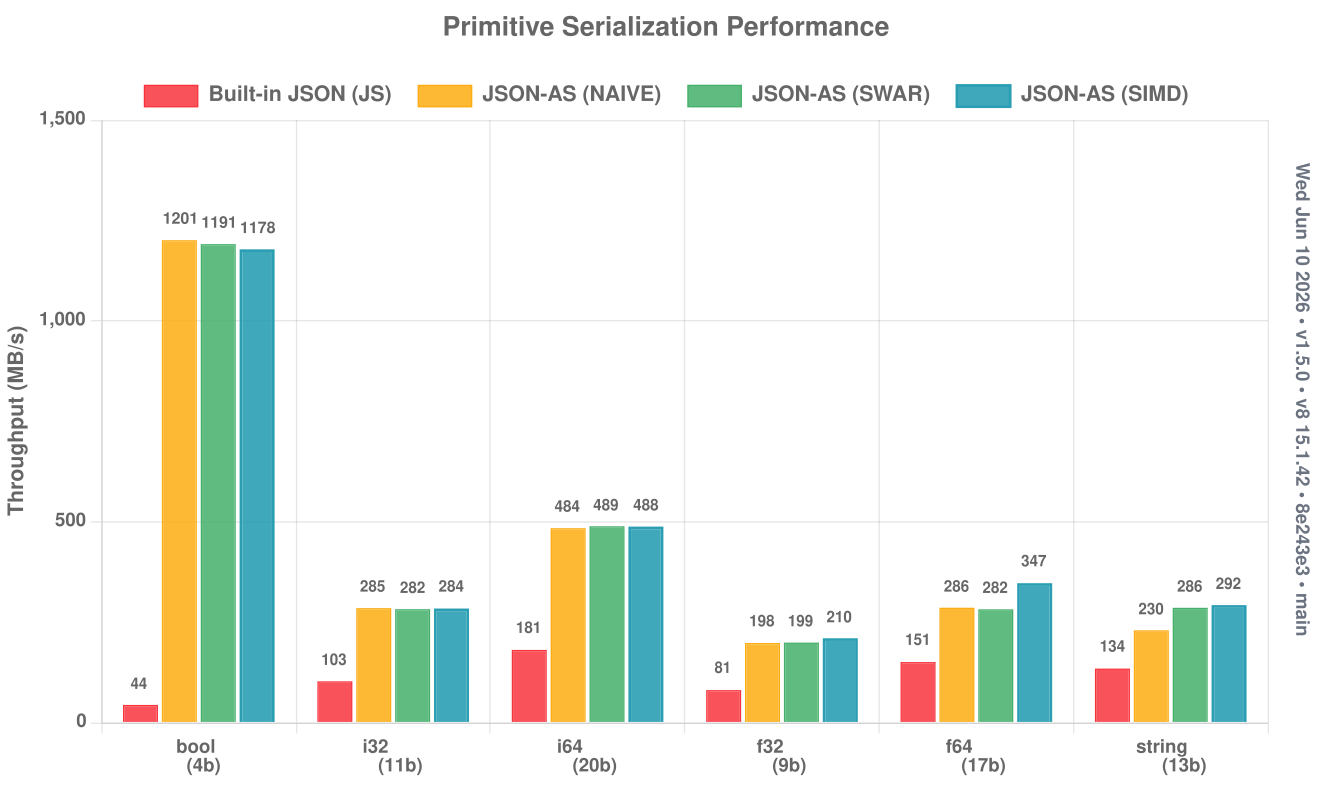
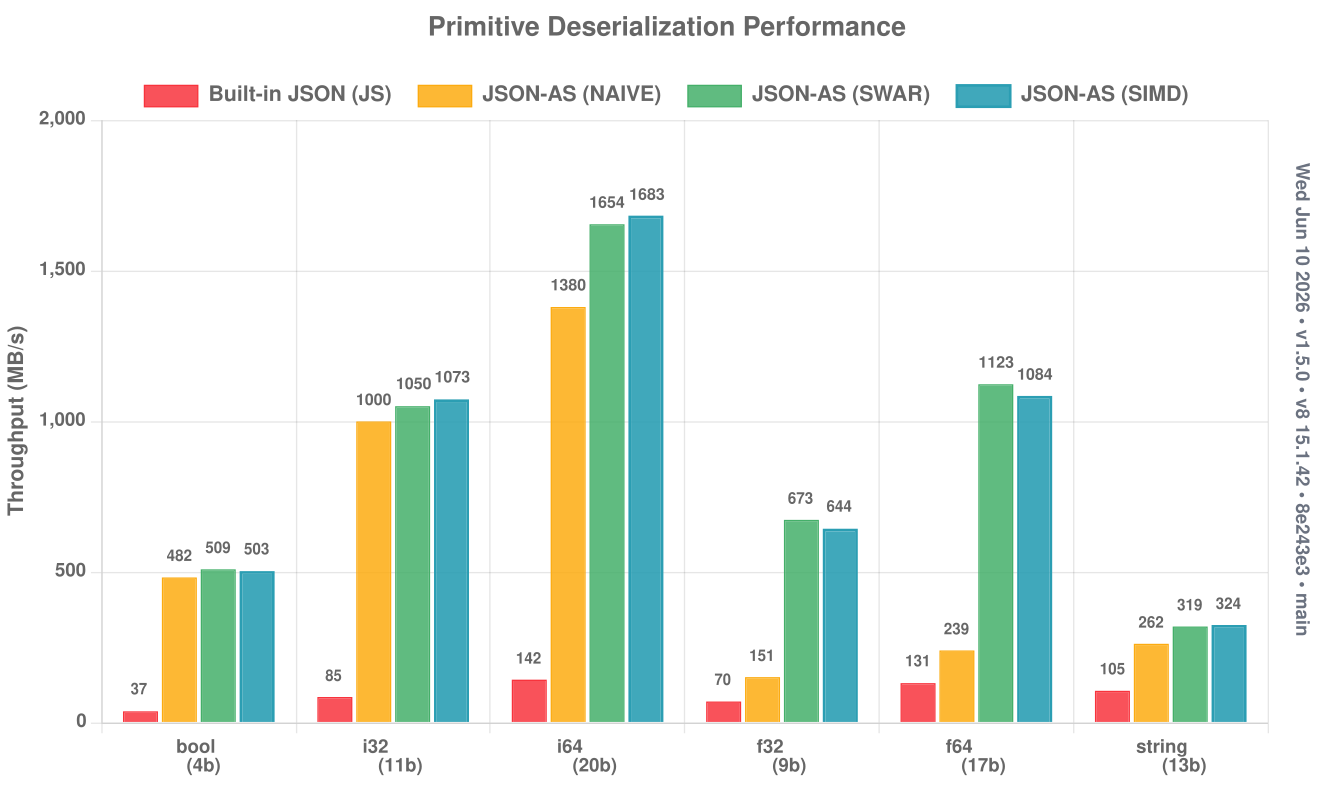
`json-as` against JavaScript's native `JSON`, parsed and stringified in a fresh V8 — as close to apples-to-apples as a Wasm-vs-native comparison gets.
Each payload stresses a different document shape:
| Payload | Size | What it stresses |
|---------|------|------------------|
| **Twitter** | 467 KB | API response, fully-modeled struct schema with `@optional` keys |
| **Canada** | 2.1 MB | GeoJSON — deeply nested arrays of floating-point coordinates |
| **CITM** | 500 KB | Concert catalog — dynamic-key `Map`s plus uniform struct arrays |
| **Poet** | 3.3 MB | ~8,900 flat `{desc, name, id}` records — pure struct fast path |
| **GitHub** | 53 KB | 30 GitHub events — a wide union of per-event-type fields |
| **GSOC** | 3.1 MB | ~1,264 org records keyed by id (schema.org JSON-LD `Map`) |
| **Lottie** | 289 KB | Vector-animation doc — structs over deeply variable layer data |
| **otfcc** | 66.4 MB | OpenType font dump — 15 tables captured as `JSON.Raw` |
| **FGO** | 48.8 MB | Game-data dump — 193 irregular tables as `Map` |
The five series in each chart:
- **NAIVE / SWAR / SIMD** — the generated struct path under each scan backend, parsing every field into a typed schema.
- **Lazy (SIMD)** — `@json({ lazy: "auto" })`: each field's raw slice is stored at parse time and decoded only on first access; on serialize, untouched fields stream their original bytes straight back out. Reading or rewriting a subset is dramatically cheaper — see [Lazy Fields](#lazy-fields).
- **JSON.Obj (SIMD)** — a fully dynamic, schema-less parse into `JSON.Obj`, with no generated per-type code.
### Comparison to JavaScript
`json-as` against JavaScript's native `JSON`, parsed and stringified in a fresh V8 — as close to apples-to-apples as a Wasm-vs-native comparison gets.
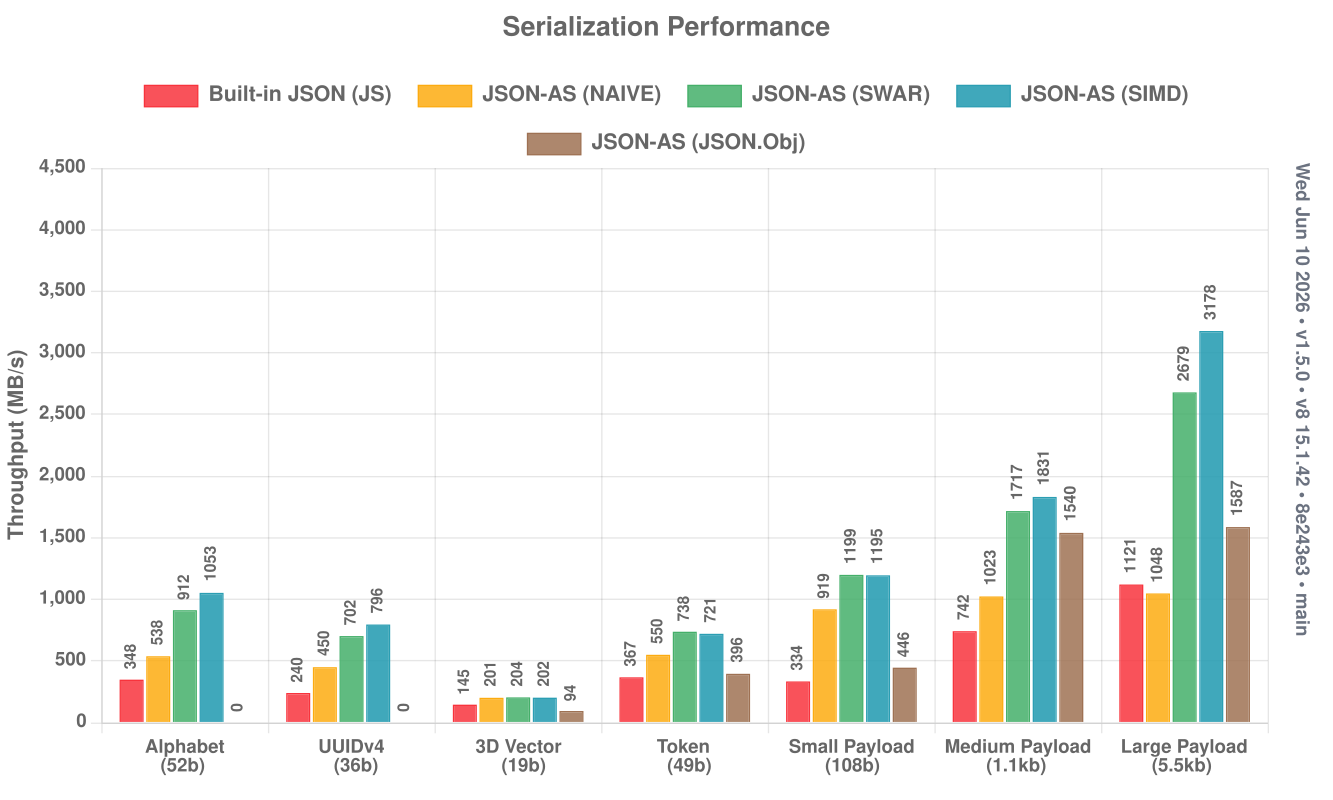
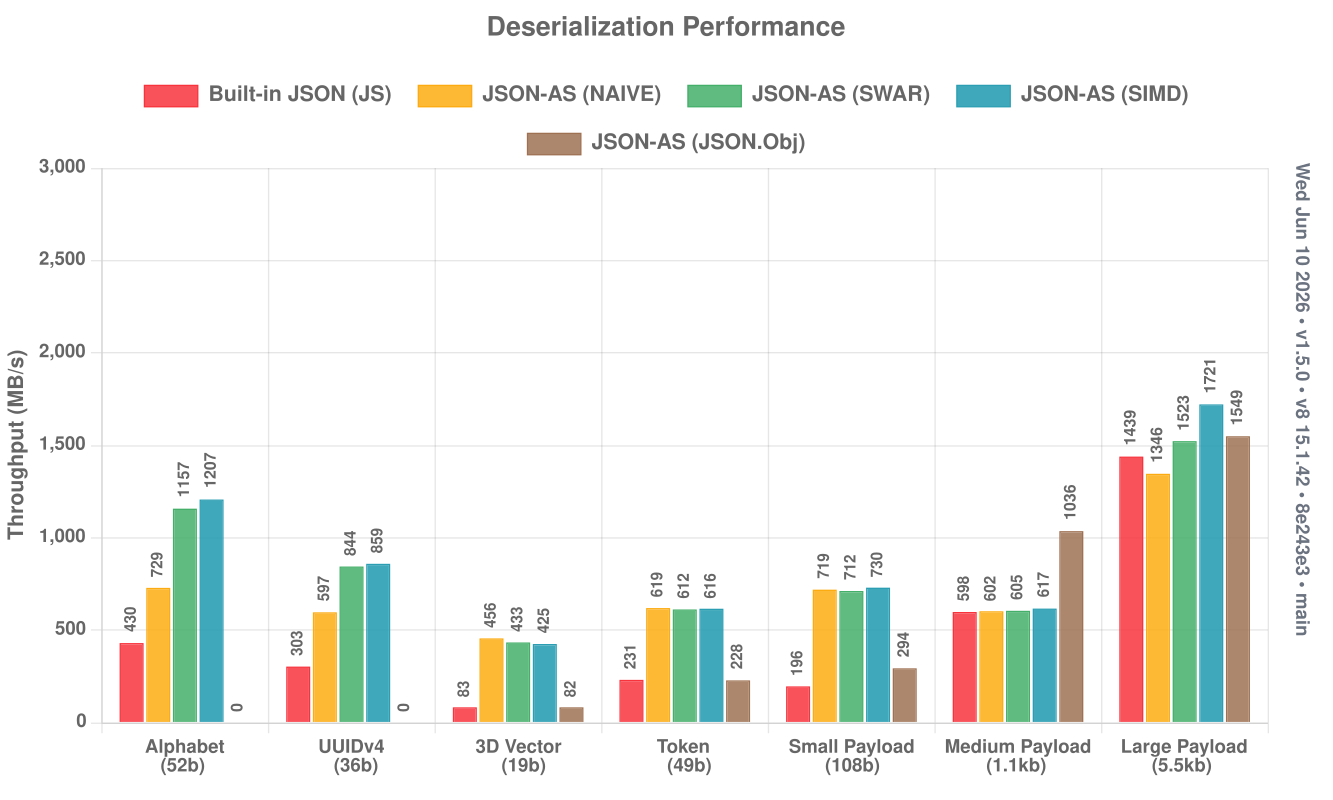
String serialize charts (click to expand)
String deserialize charts (click to expand)
Object serialize charts (click to expand)
Object deserialize charts (click to expand)
Primitive (de)serialize charts (click to expand)
### Library Comparison
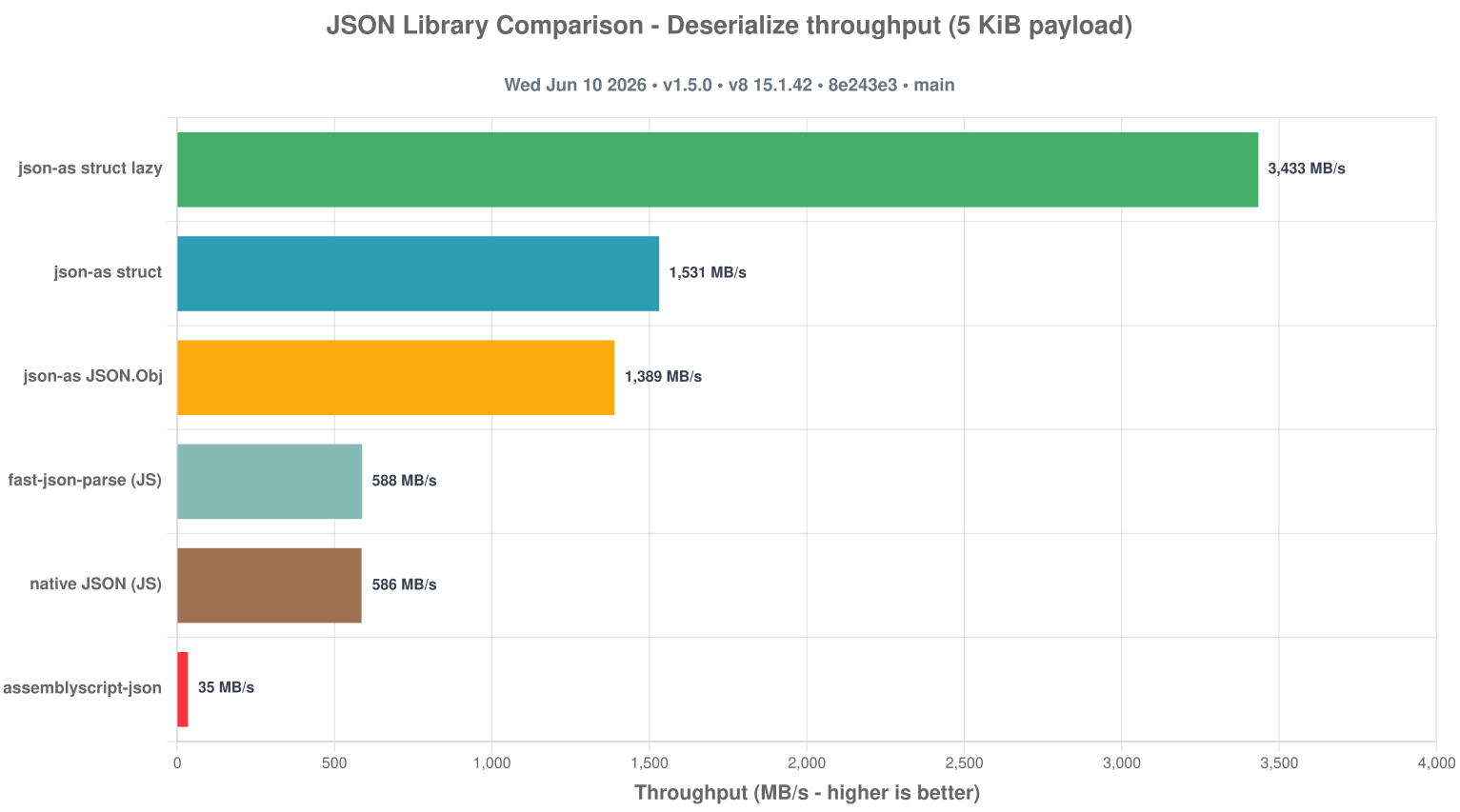
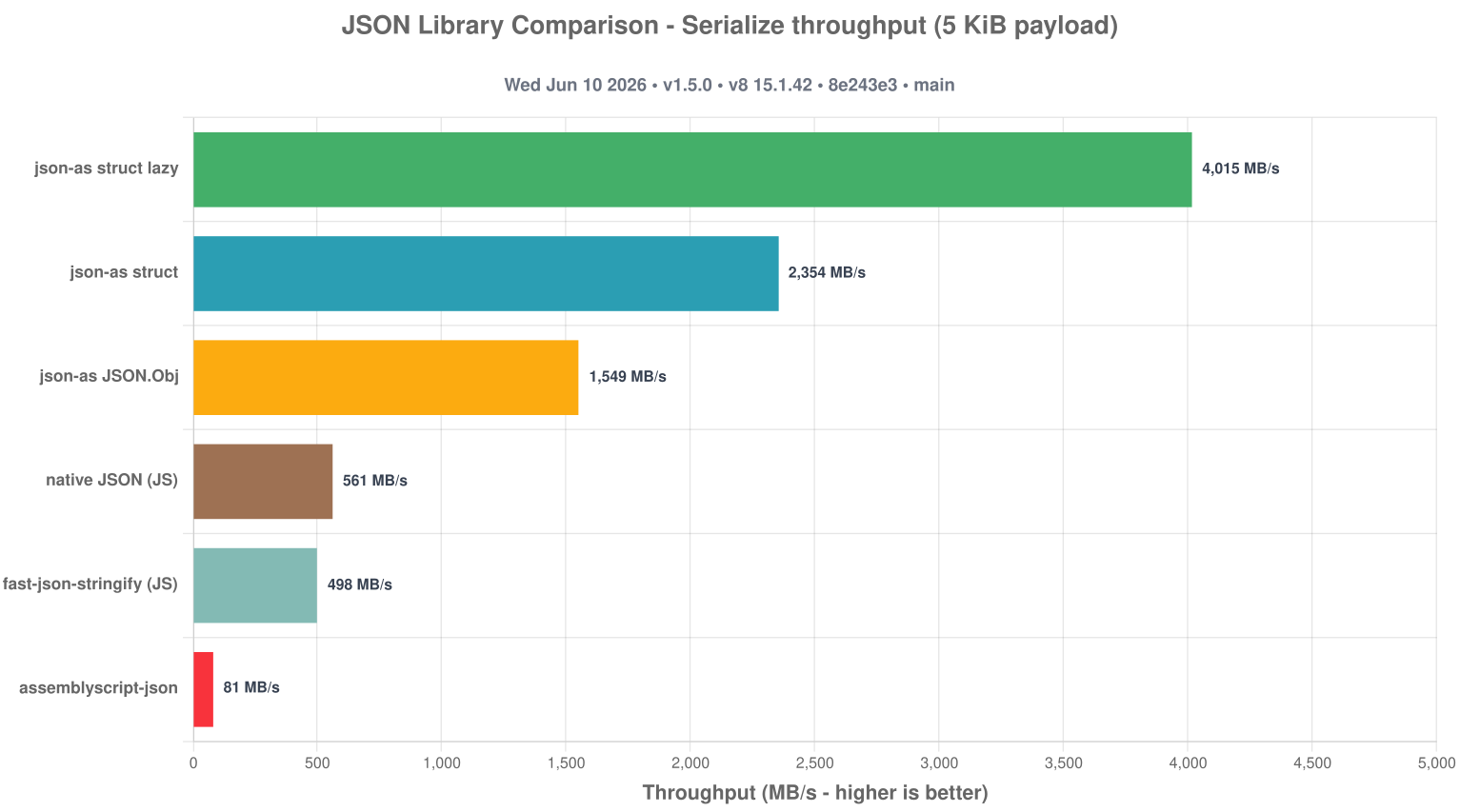
How `json-as` stacks up against other JSON libraries on a ~5 KiB GitHub-repo payload: JavaScript's native `JSON` and `fast-json` (each in a fresh V8), plus the `assemblyscript-json` package. The `json-as` bars (generated struct, lazy struct, and dynamic `JSON.Obj`) are averaged across the NAIVE / SWAR / SIMD scan modes.
 ### Lazy Fields
Mark a field `@lazy` (or `JSON.Lazy`, or a whole class with `@json({ lazy: "auto" })`) to defer it: its raw JSON slice is stored at parse time and parsed only on first access. Fields you skip are never parsed, and untouched fields pass through their original bytes on serialize. See the [Lazy Fields guide](https://docs.jairus.dev/json-as/guide/lazy-fields) for the full API and trade-offs.
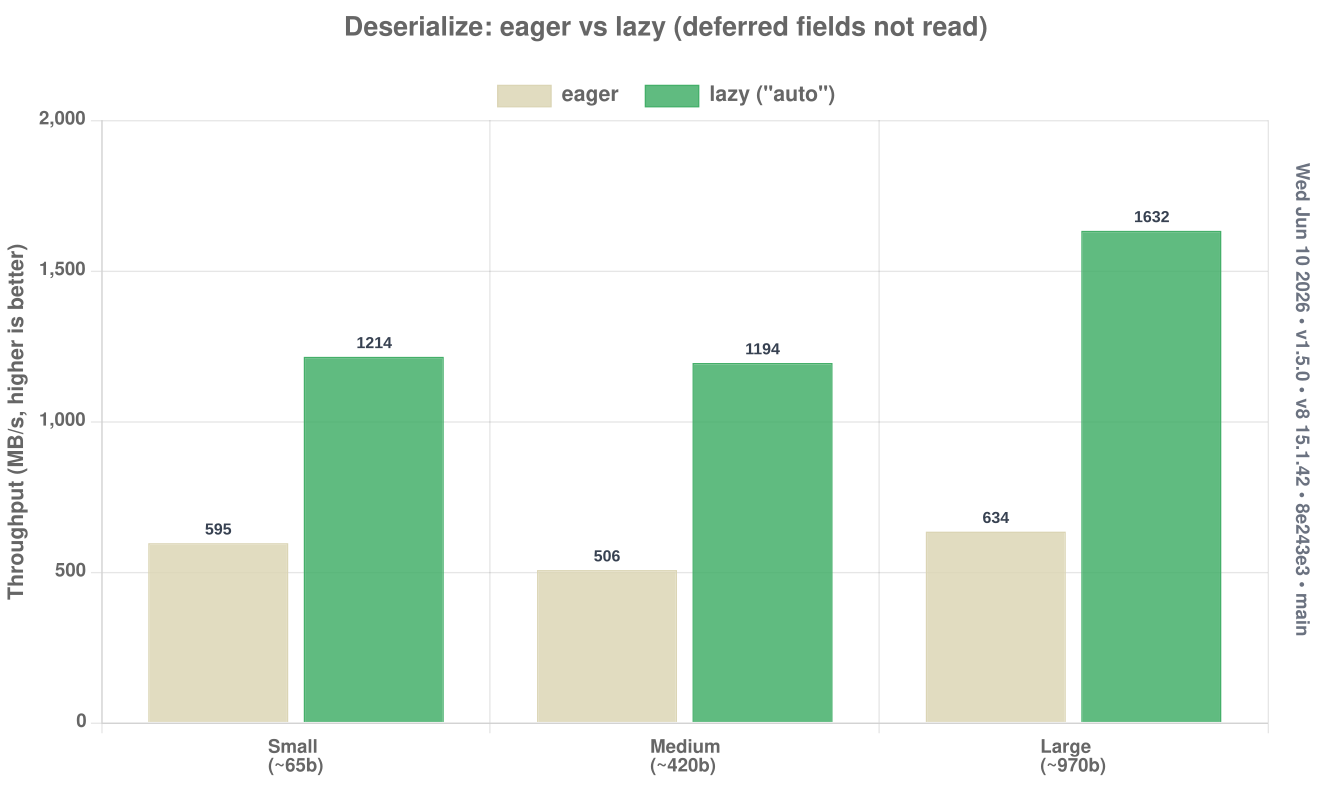
Skipping the deferred fields makes deserialization several times faster, and the win grows with payload size:
### Lazy Fields
Mark a field `@lazy` (or `JSON.Lazy`, or a whole class with `@json({ lazy: "auto" })`) to defer it: its raw JSON slice is stored at parse time and parsed only on first access. Fields you skip are never parsed, and untouched fields pass through their original bytes on serialize. See the [Lazy Fields guide](https://docs.jairus.dev/json-as/guide/lazy-fields) for the full API and trade-offs.
Skipping the deferred fields makes deserialization several times faster, and the win grows with payload size:
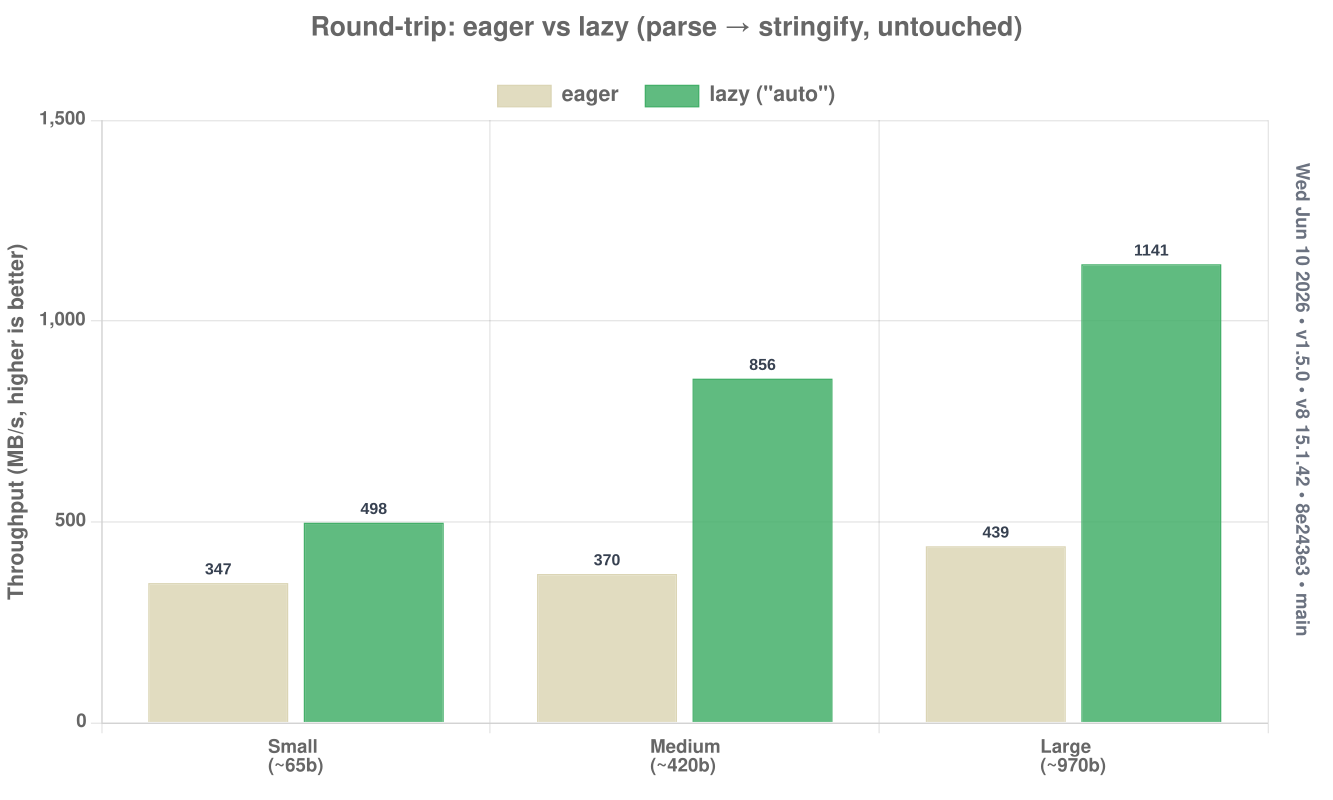
 The proxy / filter / forward case - parse then re-serialize without reading the deferred fields - copies their raw bytes straight through:
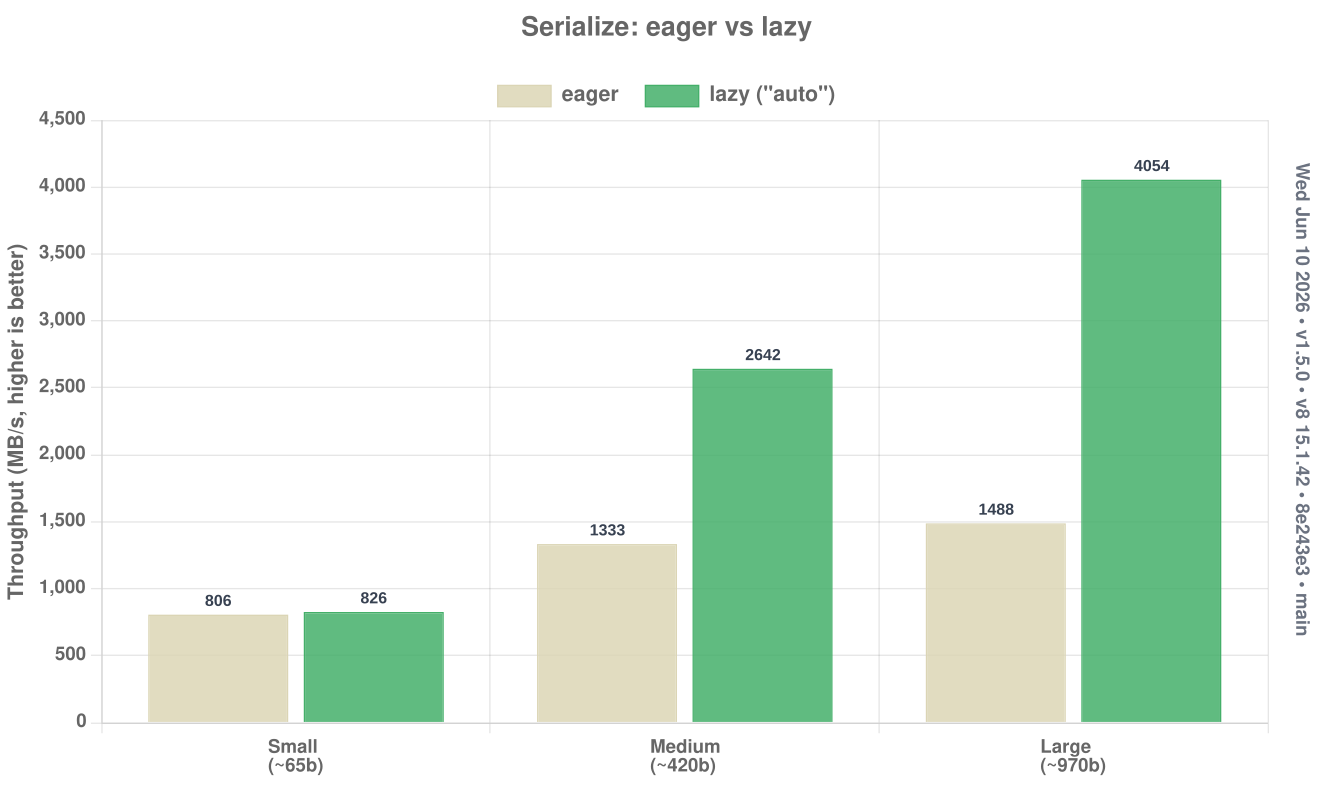
 Re-emitting a parsed object forwards the untouched fields' raw bytes instead of rebuilding them:
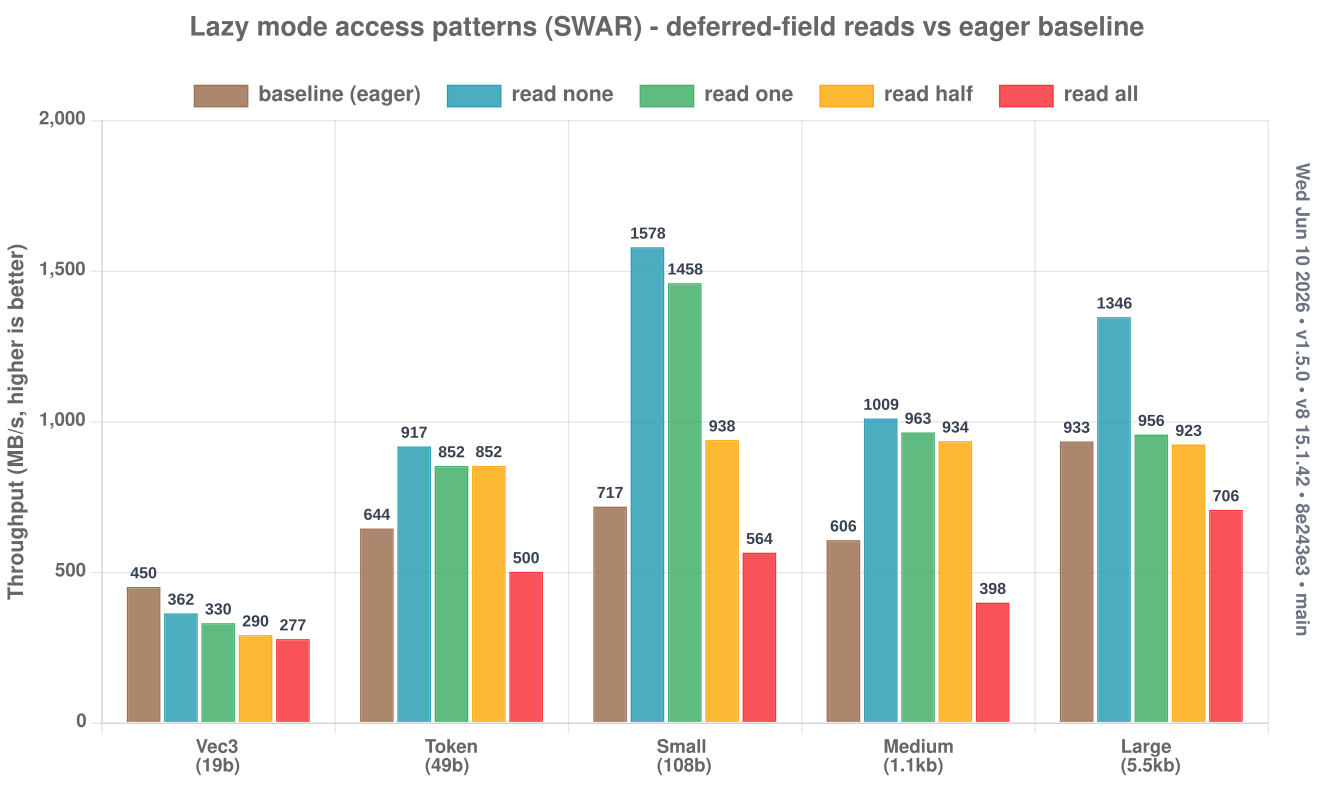
Access-pattern comparison (click to expand)
Lazy cost scales with how much you actually read. For each payload (vec3 → large) the chart compares a lazy parse that reads none, one, half, or all of its deferred fields against the eager full-parse baseline. Reading nothing or a single field is far faster than eager; reading everything approaches it (the work is deferred, not removed). SWAR only, since that's the mode the lazy fast-path is showcased in:
### Performance Tuning
Instead of using flags for setting options, `json-as` is configured by environmental variables.
Here's a short list:
**JSON_CACHE** (default: 0) - Enables and sizes string cache. Supports `true|false`, raw bytes (`JSON_CACHE=1048576`), bits (`JSON_CACHE=512kb`, `2mb`, `1gb`), and bytes (`JSON_CACHE=64KB`, `2MB`, `1GB`). May boost string serialization in excess of 22 GB/s.
**JSON_DEBUG** (default: 0) - Sets the debug level. May be within range `0-3`
**JSON_MODE** (default: SWAR) - Selects which mode should be used. Can be `NAIVE,SWAR,SIMD`. Note that `--enable simd` may be required.
**JSON_USE_FAST_PATH** (default: 1) - The transform emits the fast `__DESERIALIZE` implementation for generated structs by default. Set to `0`, `false`, `off`, or `no` to force slow-path-only output. See [FAST_PATH_DESERIALIZE.md](./FAST_PATH_DESERIALIZE.md) for the current support matrix, known gaps, and dedicated test command.
**JSON_WRITE** (default: "") - Select a series of files to output after transform and optimization passes have completed for easy inspection. Usage: `JSON_WRITE=.path-to-file-a.ts,./path-to-file-b.ts`
### Running Benchmarks Locally
Benchmarks are run directly on top of `v8` for tighter control over the engine configuration.
1. Install the local benchmark prerequisites:
```bash
npm install -g jsvu
jsvu --engines=v8
```
2. Add `~/.jsvu/bin` to your `PATH` and make sure `wasm-opt` is installed:
```bash
export PATH="${HOME}/.jsvu/bin:${PATH}"
sudo apt-get install -y binaryen
```
3. Install project dependencies:
```bash
npm install
```
4. Run either benchmark suite directly:
```bash
npm run bench:as
npm run bench:js
```
The AS suite includes **lazy variants** - `small.lazy.bench.ts`, `medium.lazy.bench.ts`, `large.lazy.bench.ts`, `token.lazy.bench.ts`, and `vec3.lazy.bench.ts` - which mark their structs `@json({ lazy: "auto" })` and dump to `-lazy` logs, so eager and lazy can be compared side by side. Run one on its own with:
```bash
bun run bench:as medium.lazy --mode simd
```
> Note: `large.lazy.bench.ts` stresses the optimizer - `lazy: "auto"` on the ~150-field `Repo` generates a getter and serialize branch per field, which can overrun **stock** Binaryen (it crashes during optimize). Build it with a patched/larger-budget Binaryen, or prefer per-field `@lazy` on very wide schemas.
5. Build charts from the latest local logs:
```bash
npm run charts:build
```
Or run the full local benchmark flow in one step:
```bash
npm run bench
```
## Debugging
`JSON_DEBUG=1` - Prints out generated code at compile-time
`JSON_DEBUG=2` - The above and prints keys/values as they are deserialized
`JSON_WRITE=path-to-file.ts` - Writes out generated code to `path-to-file.json.ts` for easy inspection
## Architecture
For a deep dive into how json-as works internally, including the transform system, optimization modes (NAIVE, SWAR, SIMD), and buffer management, see [ARCHITECTURE.md](./ARCHITECTURE.md).
For a code-oriented repository walkthrough that maps the runtime, transform, tests, and benchmark files to their concrete responsibilities, see [PROJECT_WALKTHROUGH.md](./PROJECT_WALKTHROUGH.md).
## Contributing
We welcome contributions! Please see [CONTRIBUTING.md](./CONTRIBUTING.md) for guidelines on:
- Setting up your development environment
- Running tests and benchmarks
- Code style and commit conventions
- The pull request process
## Who uses it?
A few companies and open-source projects use json-as!
| Company/Project | Description |
|-----------------|-------------|
| [Impart Security](https://impart.security) | API security platform |
| [Hypermode](https://hypermode.ai) | AI infrastructure |
| [Steer Finance](https://steer.finance) | DeFi protocol |
| [Secretarium](https://secretarium.com) | Confidential computing |
| [Klave](https://klave.com) | Privacy-first platform |
| [Bifrost](https://github.com/maximhq/bifrost) | Open source project by Maxim HQ |
| [Massa Labs](https://github.com/massalabs) | Massa blockchain tooling |
| [Seda Protocol](https://github.com/sedaprotocl) | Wasm-based blockchain VM |
## License
This project is distributed under an open source license. Work on this project is done by passion, but if you want to support it financially, you can do so by making a donation to the project's [GitHub Sponsors](https://github.com/sponsors/JairusSW) page.
You can view the full license using the following link: [License](./LICENSE)
## Contact
Please send all issues to [GitHub Issues](https://github.com/JairusSW/json-as/issues) and to converse, please send me an email at [me@jairus.dev](mailto:me@jairus.dev)
- **Email:** Send me inquiries, questions, or requests at [me@jairus.dev](mailto:me@jairus.dev)
- **GitHub:** Visit the official GitHub repository [Here](https://github.com/JairusSW/json-as)
- **Website:** Visit my official website at [jairus.dev](https://jairus.dev/)
- **Discord:** Contact me at [My Discord](https://discord.com/users/600700584038760448) or on the [AssemblyScript Discord Server](https://discord.gg/assemblyscript/)