# i2cdriver
An i2c development board that works on Mac, Windows, and Linux?
... and has a graphic display?
... and for under $30?
**Yes please!** [Buy one now!](https://amzn.to/2onQUTr)
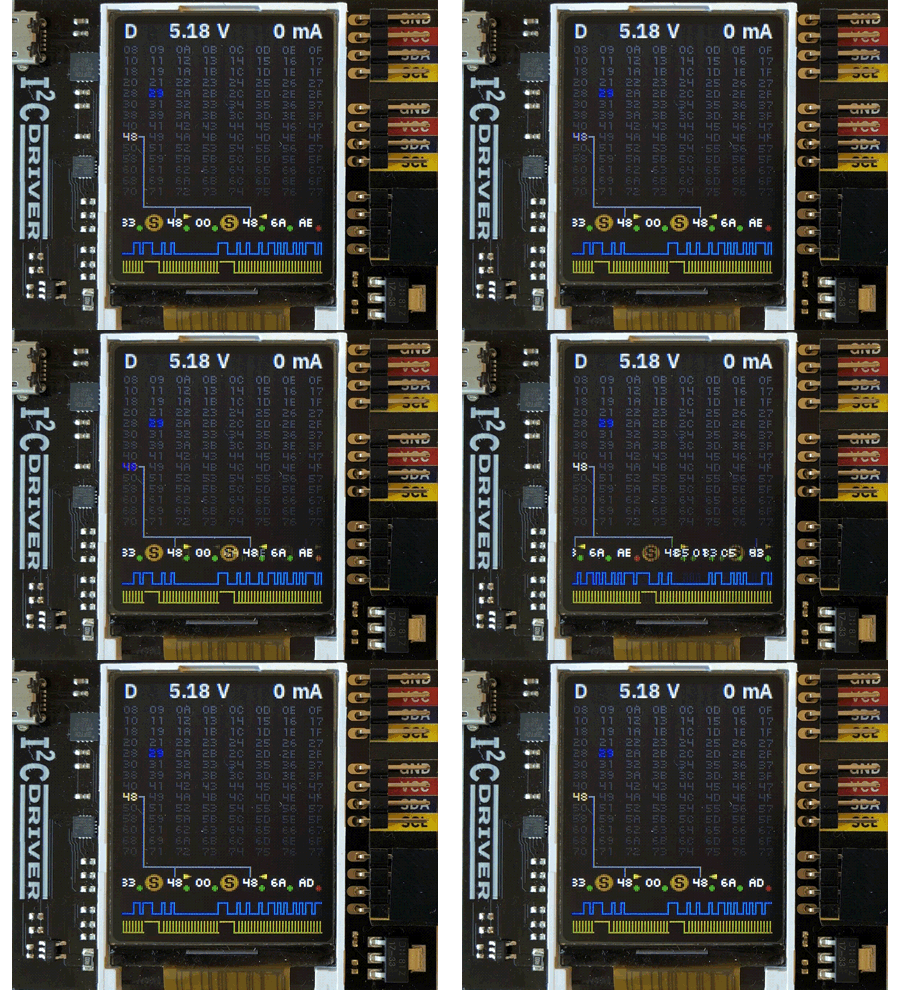
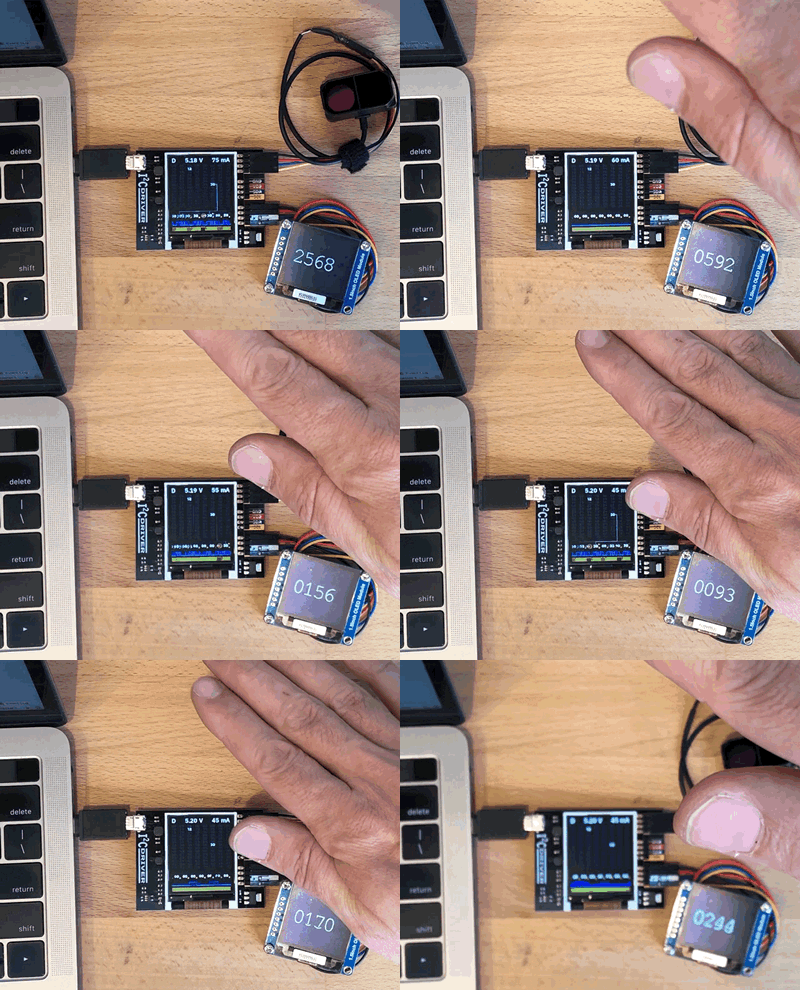
This library contains functions for:
- `i2c-bus` API
- i2cdriver device API
### Swap in place of the `i2c-bus` module
```js
// const i2c = require('i2c-bus')
// const bus_id = 1
const i2c = require('i2cdriver/i2c-bus')
const bus_id = '/dev/tty.usbserial-DO01INSW'
const tfminiplus = require('tfmini-plus')
i2c.openPromisified(bus_id)
.then(async (bus) => {
const tfmp = await tfminiplus.I2C(bus, 0x10)
const distance = await tfmp.distance()
console.log('distance:', distance)
})
.catch(console.error);
```
[i2c-bus](https://www.npmjs.com/package/i2c-bus) is a popular module for communicating with i2c devices. This module provides
a compatible/interchangable API so you can develop your i2c code on your development computer and deploy it to a device
later- with only swapping out the module reference and bus id.
## i2cdriver API
The API functions try to match the [API provided by i2cdriver](https://i2cdriver.com/i2cdriver.pdf) as close as possible.
The driver API just issues the special device commands. It does not enforce any specific (valid) command order.
You will likely want to use [i2c-bus](#i2c-bus) compatible APIs which coordinates the device calls properly.
### setspeed(100|400)
Sets the i2c bus speed (in KHz).
Supported values are:
- `100` = 100KHz
- `400` = 400KHz
### setpullups(mask)
Sets the SDA and CLK pull-up resister values. See [the i2cdriver documentation](https://i2cdriver.com/i2cdriver.pdf)
for more information.
Valid values: `0b000000` to `0b111111`
### scan()
Scans the i2c bus (0x08-0x77) for connected devices.
**Returns:** An array of address numbers of detected devices.
### reset()
Resets the i2c bus.
### start(addr, rw)
Starts a read or write session to a device on the bus.
`addr` - The i2c device address
`rw` - Indicates whether to start a **read** or **write** session. Valid values:
• `"write"`, `0`, `false`
• `"read"`, 1, `true`
### read(length)
Issues a read request for `length` bytes. You should call [start(addr, 'read')](#startaddr-rw) first. The i2cdriver does not
restrict you from sending a read/write request out of sequence- but the result will be unknown (probably not good).
**NOTE1:** The [i2c-bus](#i2c-bus) APIs coordinate these calls properly.
**NOTE2:** The i2cdriver device is limited to 64 bytes in a single read. This
function will read 64 byte chunks at a time- but the device must support an
internal read cursor (it remembers where it left off).
**Returns:**: A Buffer of the bytes read.
### write(buff)
Writes the Buffer to the i2c bus. You should call [start(addr, 'write')](#startaddr-rw) first. The i2cdriver does not
restrict you from sending a read/write request out of sequence- but the result will be unknown (probably not good).
`buff` - A Buffer of the bytes you want to send
**Note:** The [i2c-bus](#i2c-bus) APIs coordinate these calls properly.
### stop()
Concludes a read or write session.
### regrd(addr, register, length = 1)
A helper function that reads from a register on a device.
`addr` - The i2c device address
`register` - (byte) The register to read from.
`length` - The number of bytes to read. (e.g.: 2 for a 16 bit value)
**NOTE:** The i2cdriver device is limited to 64 bytes in a single read. This
function will read 64 byte chunks at a time- however, this deviates from how
other i2c implementations operate and may cause problems.
**Returns:**: A Buffer of the bytes read.
### regwr(addr, register, value)
A helper function that writes to a register on a device.
`addr` - The i2c device address
`register` - (byte) The register to write to.
`value` - The byte(s) to write. Vaid values:
• `byte` (Number)
• `[byte1, byte2]` (Array of bytes) for 16bit values
### status()
Gets the device status. See [the i2cdriver documentation](https://i2cdriver.com/i2cdriver.pdf)
for more information.
**Returns:**: An object with the status properties.
# License
MIT